Friendship Proliferation
Weaving & rekindling connections in a digital world
In 2024, I attended a three-day product design sprint at The University of Western Ontario. The challenge was to develop a digital product that would help individuals to develop and maintain meaningful friendships. Although we did not win this competition, I took it as a valuable stepping stone in my growth as a designer.
The design brief was detailed as follows:
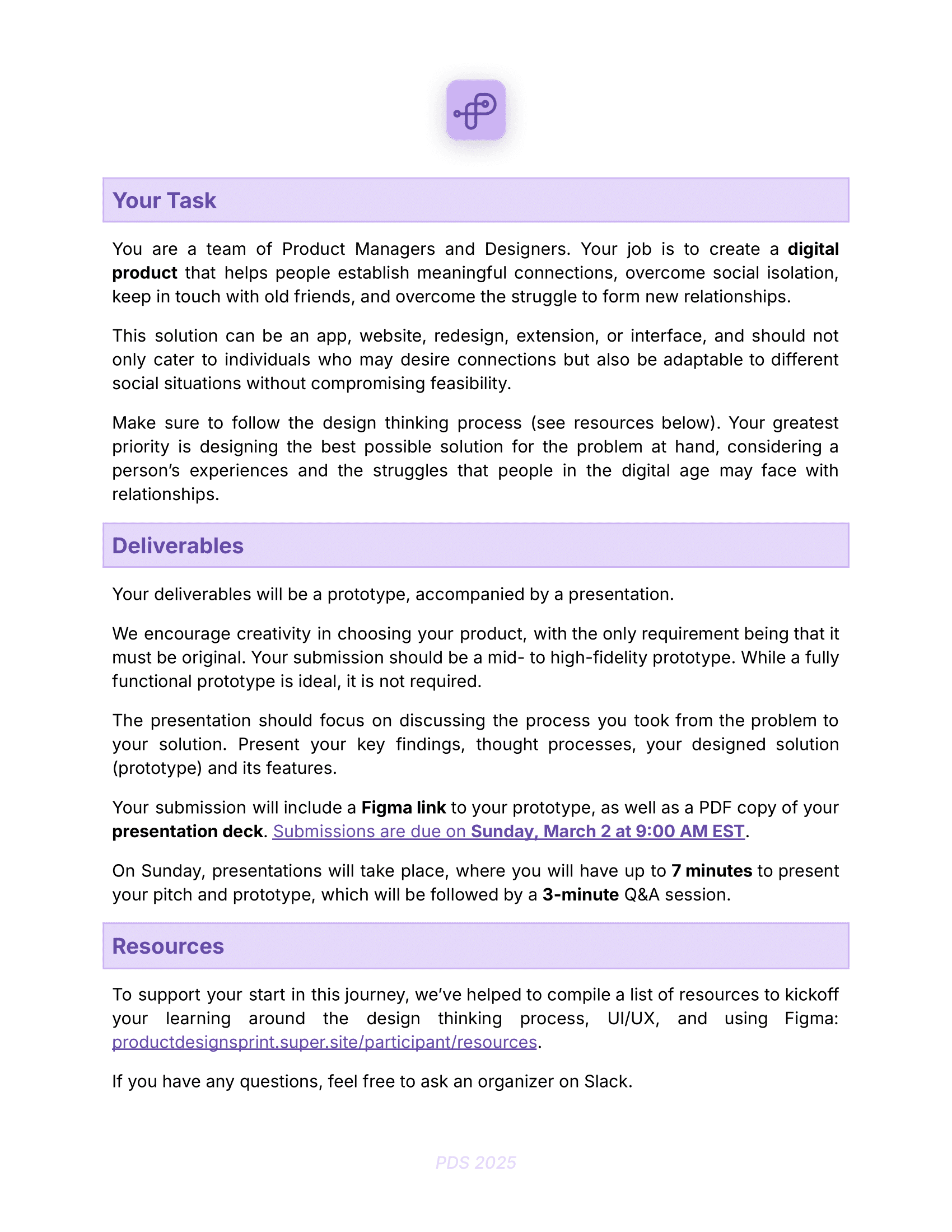
Both my partner and I resonated with the challenges described in this brief immediately. During COVID-19, we experienced firsthand how disconnection and the absence of social interaction can wear on someone and kindle loneliness. These conversations led us to two core pillars that guided all early decisions for Weave:
Making Friends — lowering the barriers to meeting new people
Maintaining Friendships — supporting long-term connection
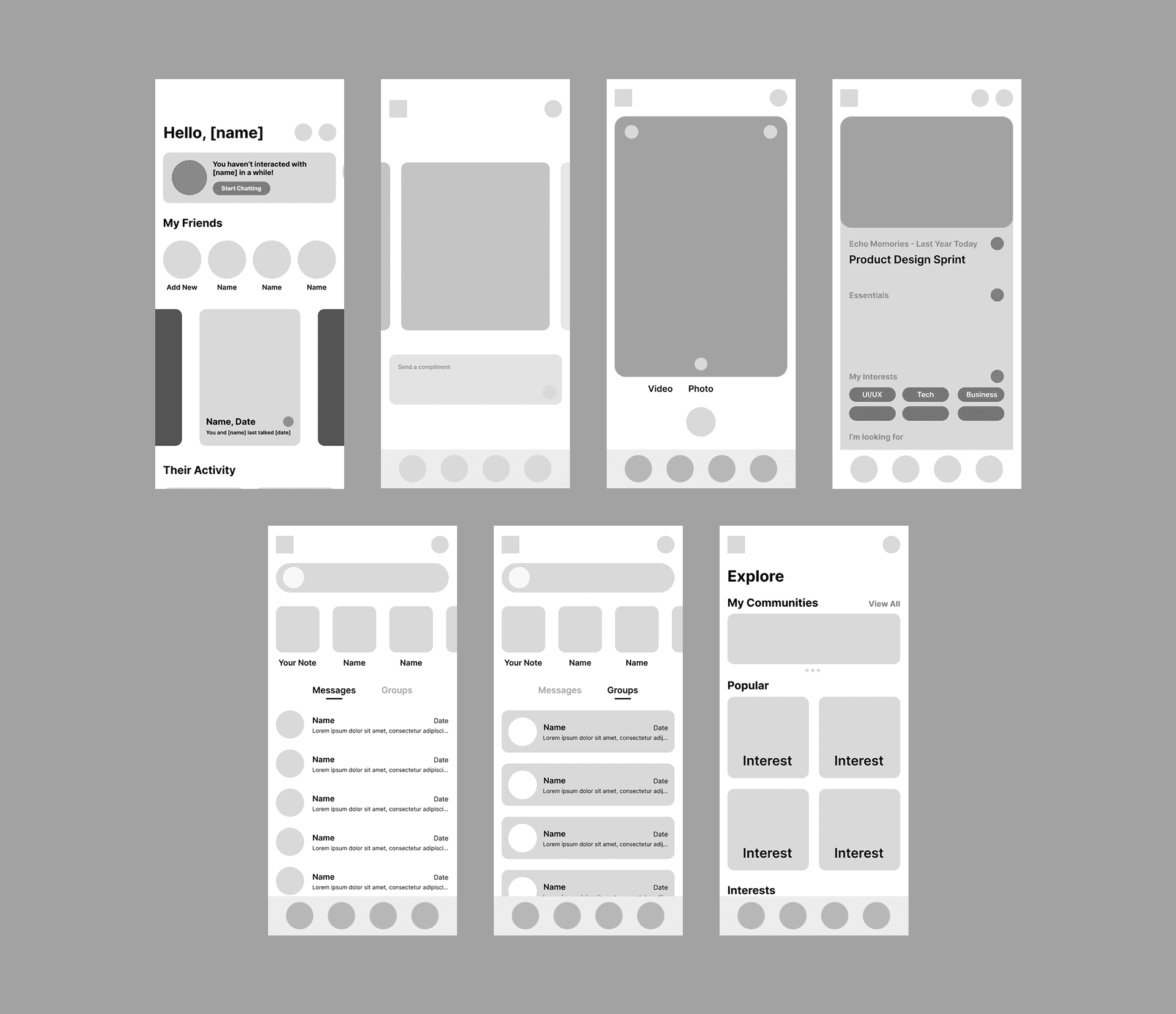
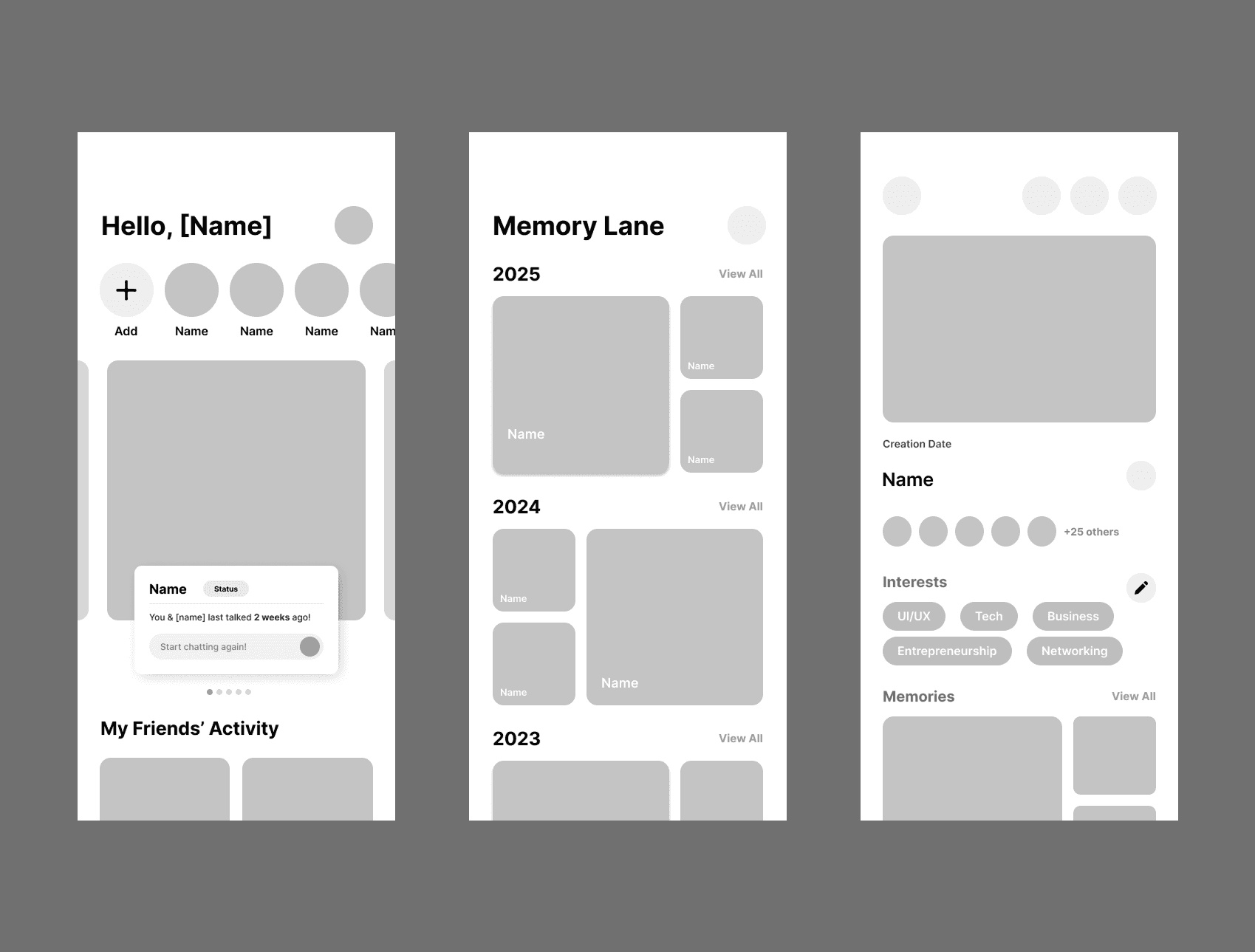
With these themes in mind, we created our wireframes:
Our Prototype
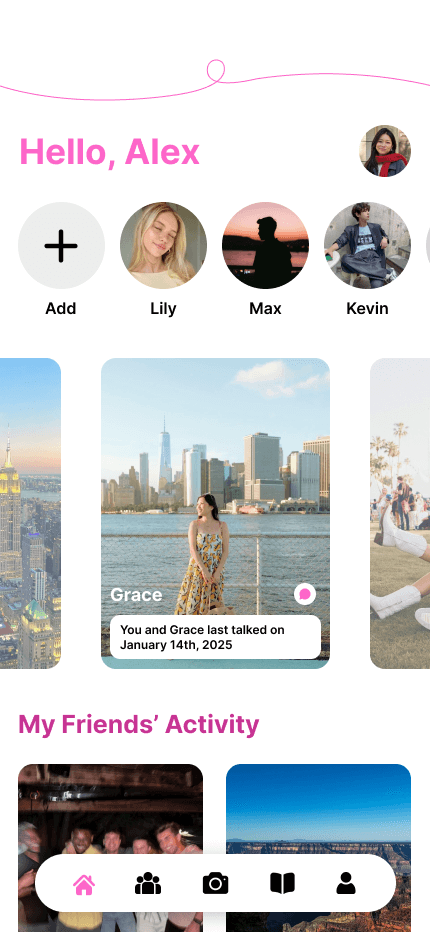
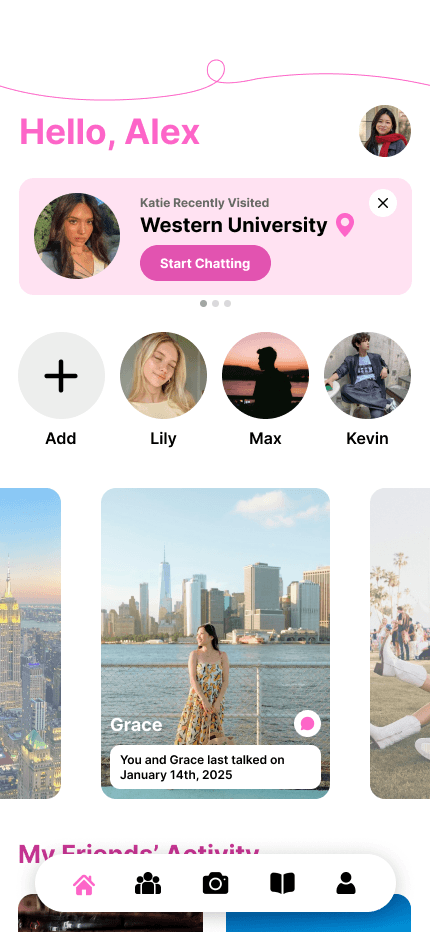
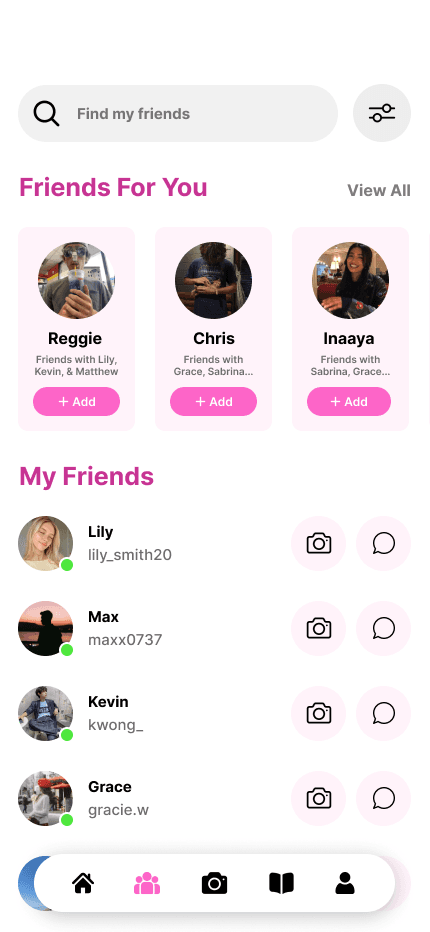
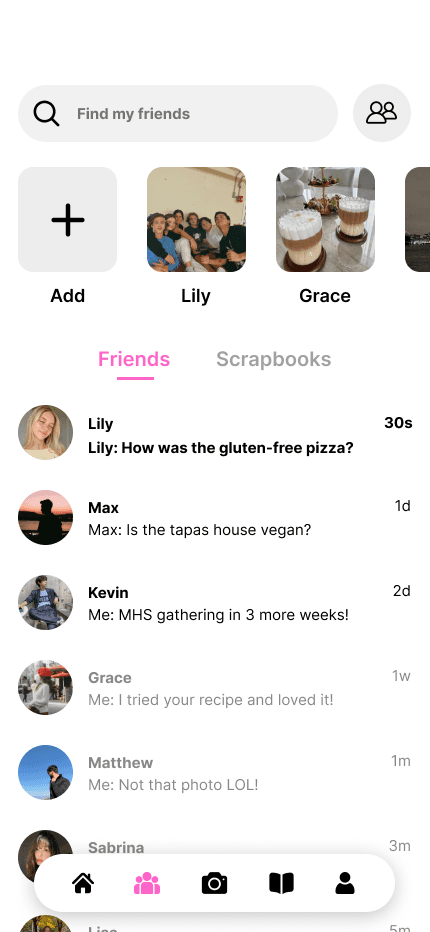
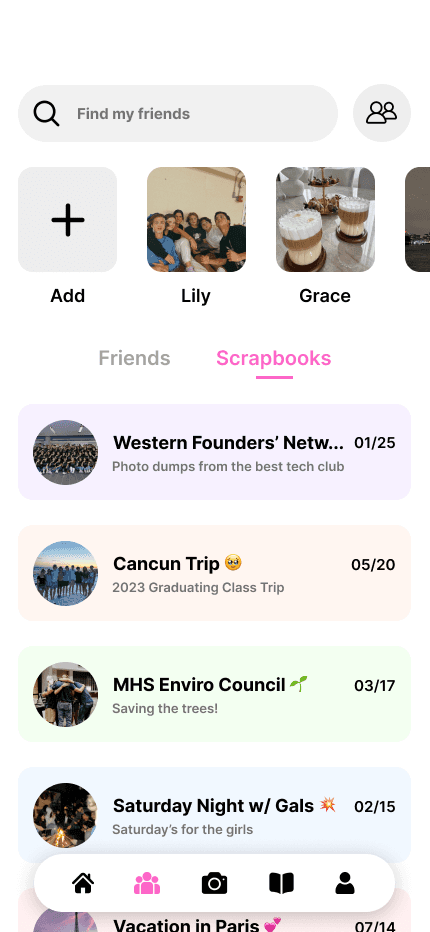
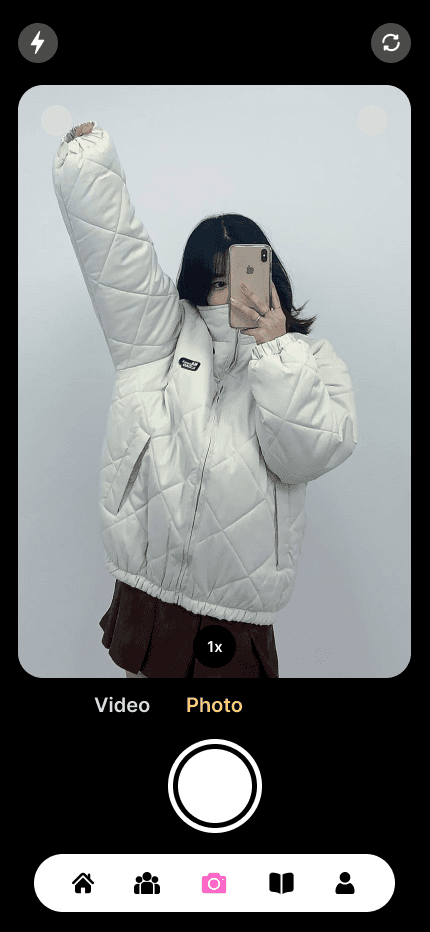
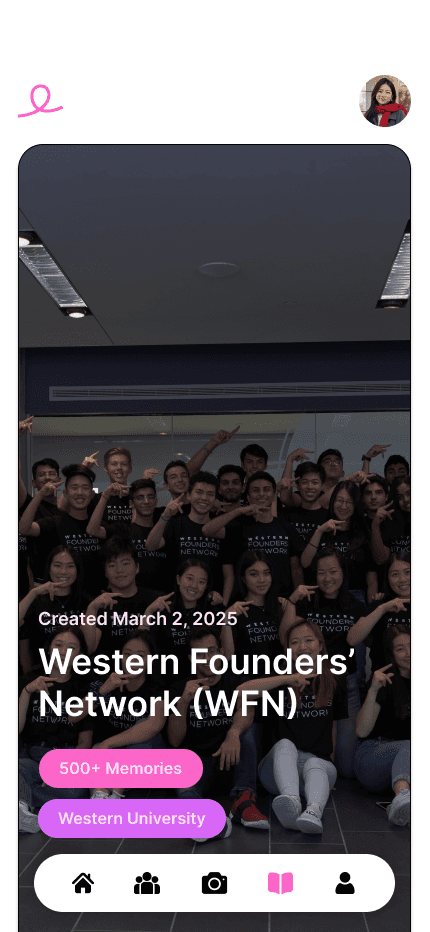
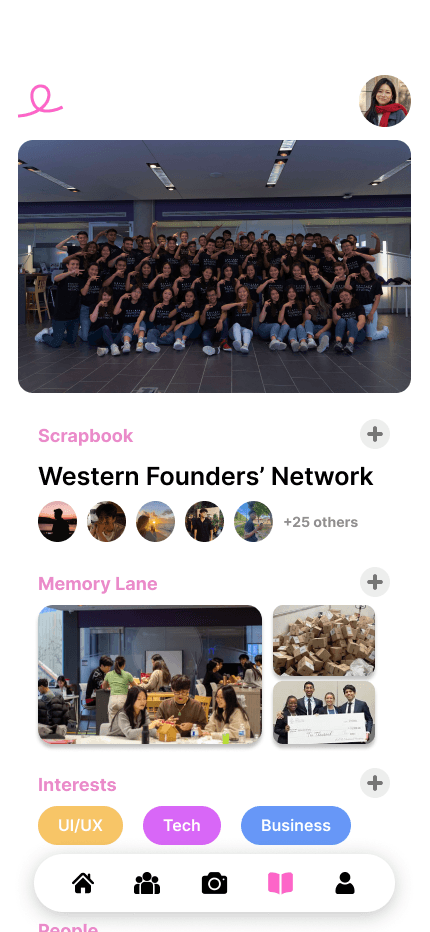
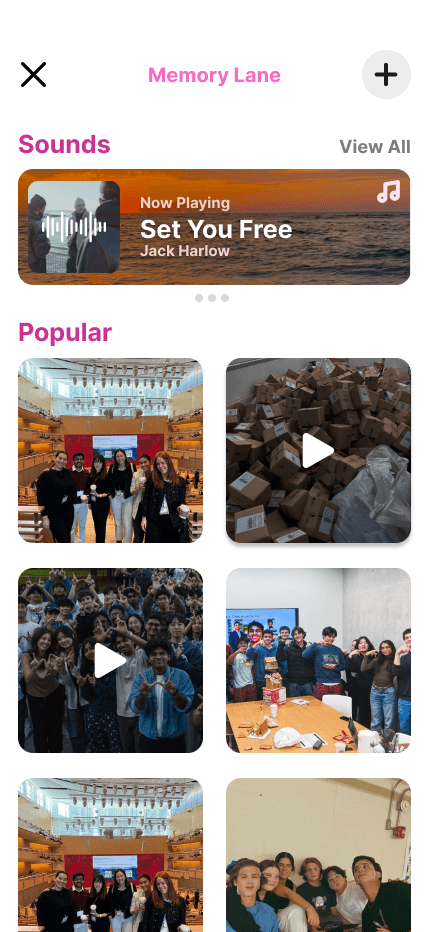
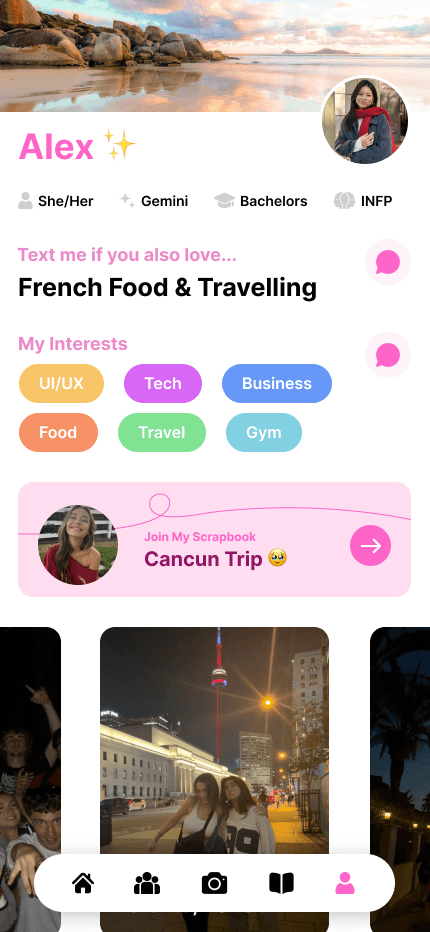
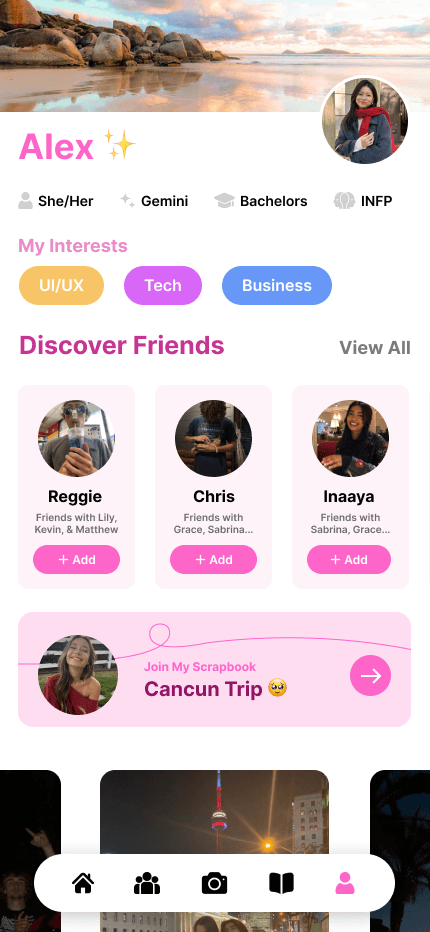
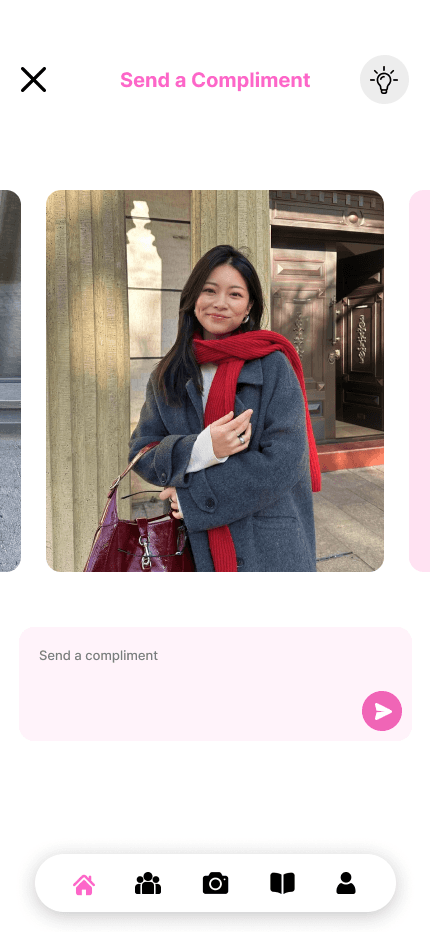
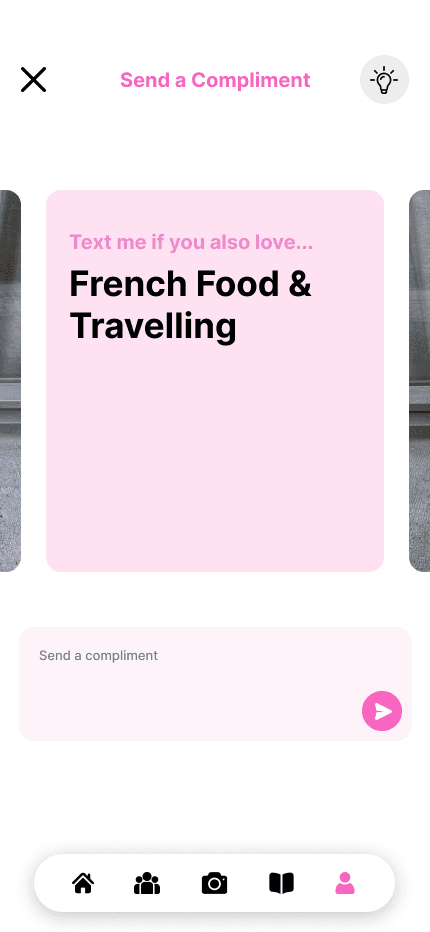
Key features of the first prototype:
Home page: Showed updates on friends’ activities, similar to Instagram and Snapchat stories
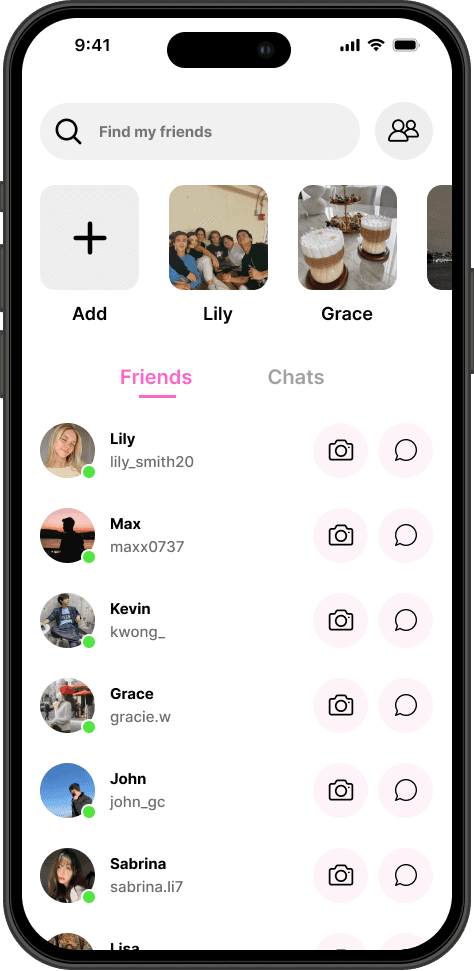
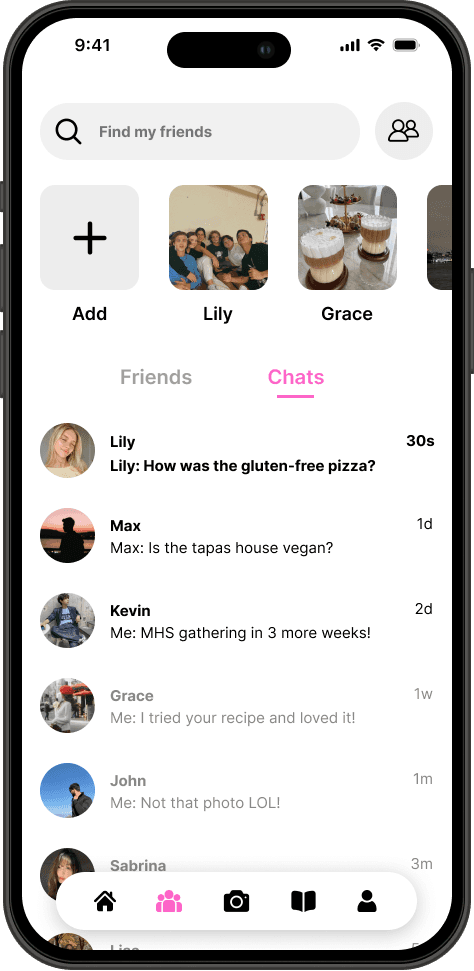
Friend profiles & messaging: Allowed direct communication and casual interaction
Chat prompt: Displayed a shared memory from a friend’s gallery to spark conversation
Location-based updates: (Optional) Shared recent places friends visited to inspire talking points
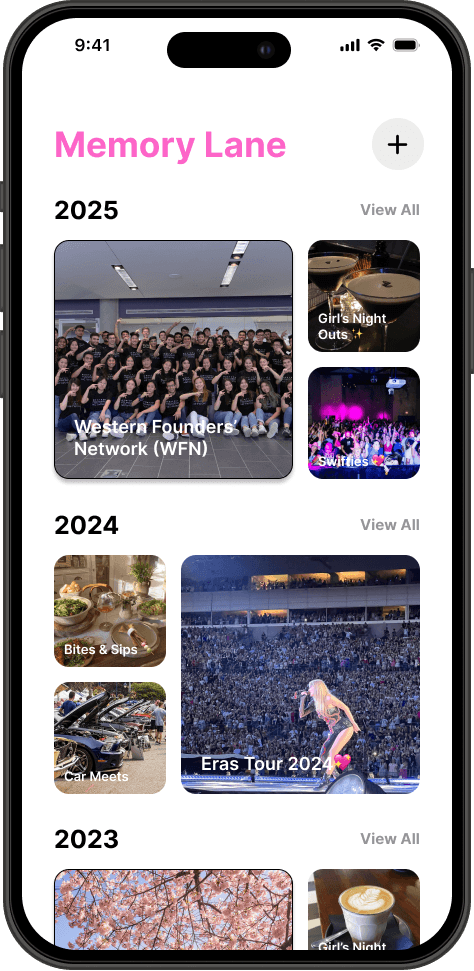
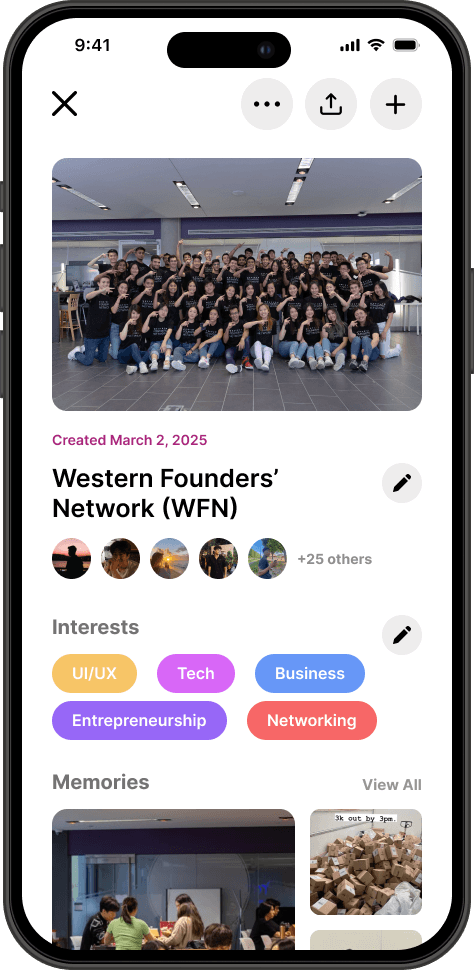
Memory Lane: A scrapbook-style page showcasing shared events and memories
BeReal-style camera option: Enabled spontaneous posts to appear in the chats’ story section
Unfortunately, this initial submitted prototype for the competition did not focus much on the friend-making aspect, but instead maintained focus on the friend-maintaining aspect, as indicated by the BeReal style feature and the memory lane. Overlooking such a major component of the challenge likely contributed to our lack of success in the competition. Still, this shortfall became a valuable catalyst — one that motivated me to revisit the concept and reimagine Weave as a sprint-winning prototype.
Through a more thorough analysis of the original submitted work, I discovered the following areas in need of improvement:
Limited exploration in friend-making
The app felt geared to only maintaining users’ existing friend groups, defeating the other core issue in the challenge.
Interface too similar to Instagram
Ironically, we felt that Instagram was too impersonal for developing and maintaining friendships due to the ‘picture-perfect’ culture within the platform. The well-curated profiles rarely reflected people’s real lives, creating a pressure to maintain a ‘picture-perfect’ appearance. Unfortunately, our design eventually mirrored this impersonality this experience in some features.
‘Join My Scrapbook’ popup felt out of place
Scrapbooks are a personal collection of memories experienced and created by a certain friend group. Allowing strangers to join scrapbooks would feel out of place, as they wouldn’t share the memories captured inside. A share option would be more fitting if someone wanted to showcase the scrapbook to someone new.
Location updates felt invasive
Live location sharing is typically reserved for close friendships or relationships. If users were comfortable with it, they would likely rely on existing apps such as Find My, Life360, or Snapchat Maps. In addition, conversations about someone’s location can feel awkward or unsettling — no one wants to appear as if they’re monitoring someone’s movements, or vice versa.
UI/UX needed improvement
Accessibility & clarity could be enhanced by rethinking colour choices, such as the colours of scrapbooks and the light pink containers, which lacked sufficient contrast.
With the insights gained from my analysis, I set out to re-invent Weave. To maintain the theme of maintaining relationships, I kept the Memory Lane concept as it was one of the strongest elements for sustaining and re-kindling friendships. However, this time, I prioritized the friend-making experience in addition.
Exploring the Market
To better understand how relationships are formed digitally, I turned to dating apps such as Tinder, Bumble, and Hinge. While these apps’ primary purpose is romantic, their underlying design principles revolve around building connections.
Tinder — Fast, Visual, Gamified
Tinder, arguably the most recognizable dating app, embodies the fast-paced, appearance-driven culture it’s known for. The carousel of photos displayed as the thumbnail for each profile encourages quick, surface-level decisions, often reducing individuals to “judge a book by its cover” attitudes. Its swiping feature further amplifies this behaviour with its distinct gamification from the bold stickers and playful effects that make swiping addictive.
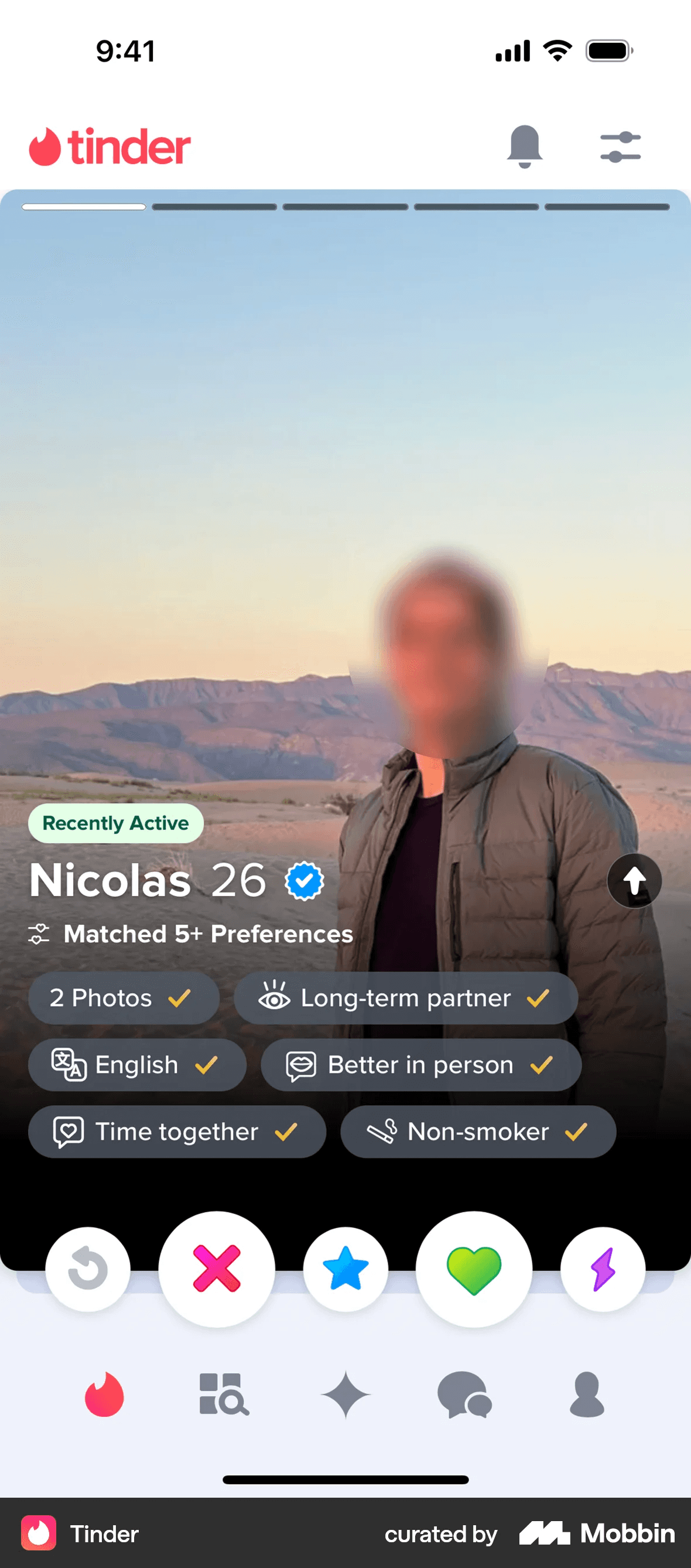
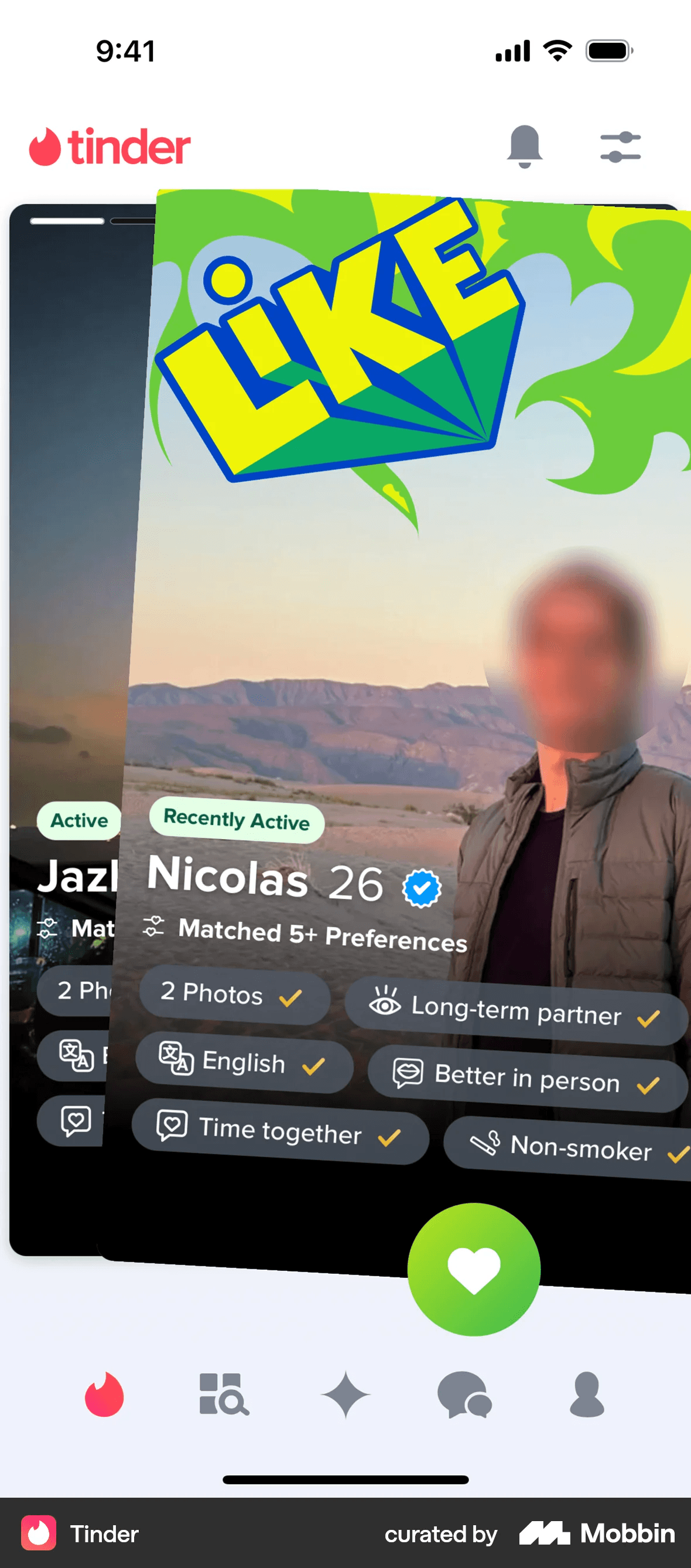
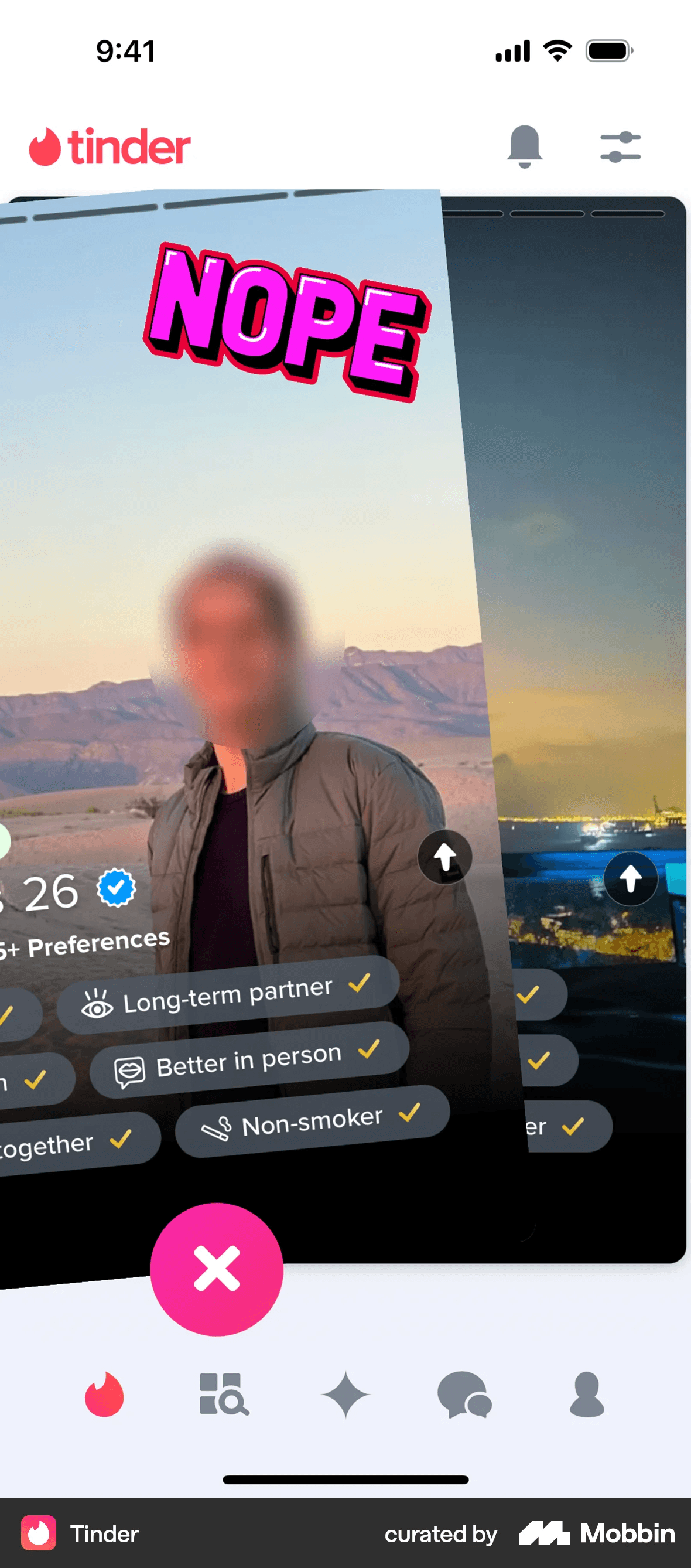
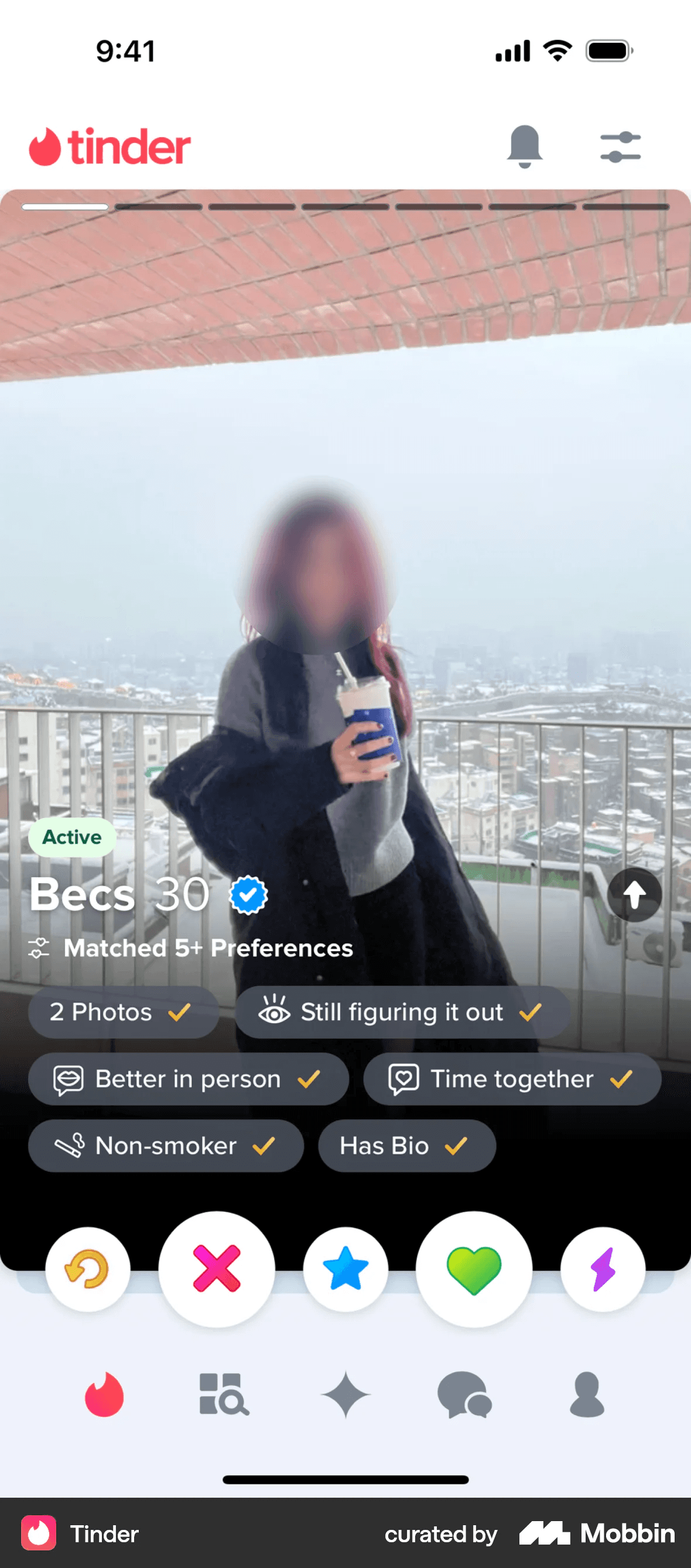
Tinder’s gamification extends to features like Super Likes and Boosts, all brightly designed and reminiscent of power-ups in a game. Although they undoubtedly boost paid transactions within the app, they can feel impersonal to the user.
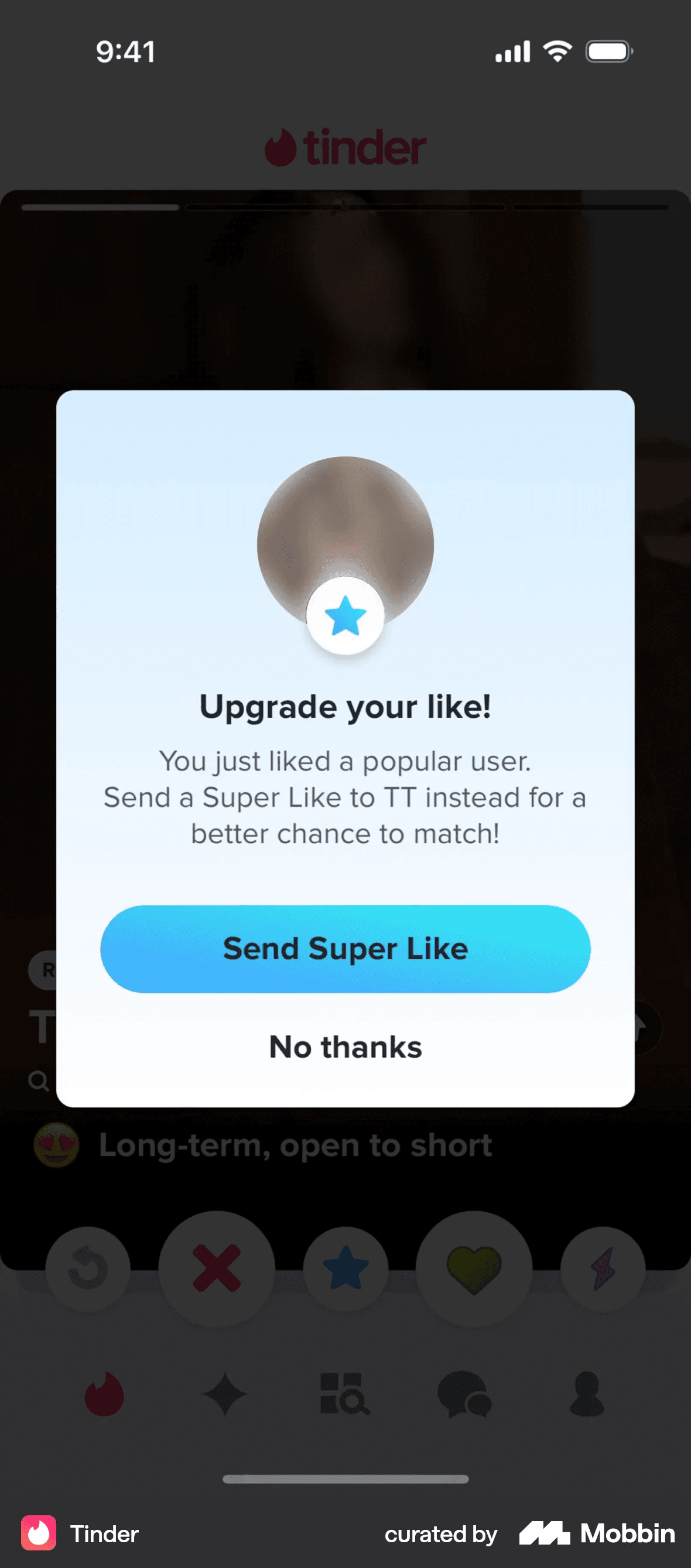
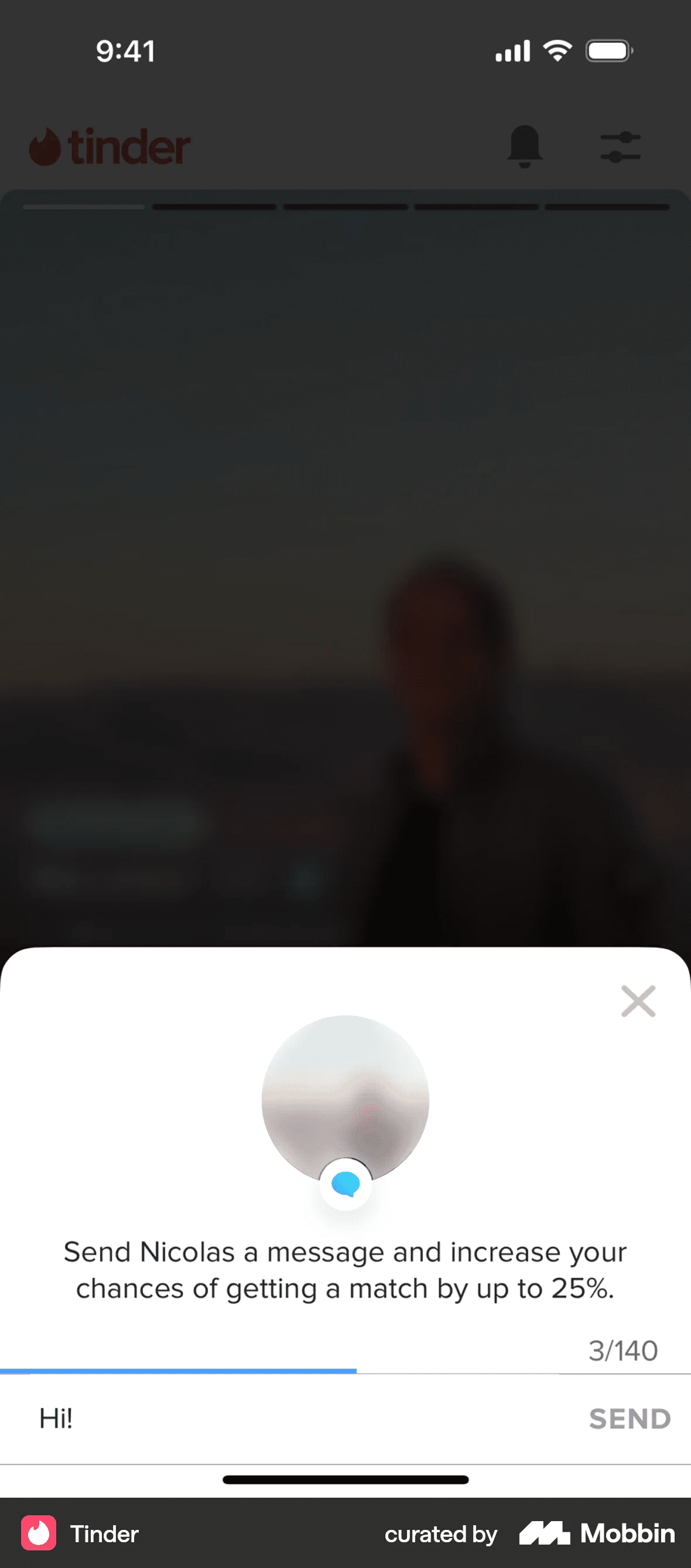
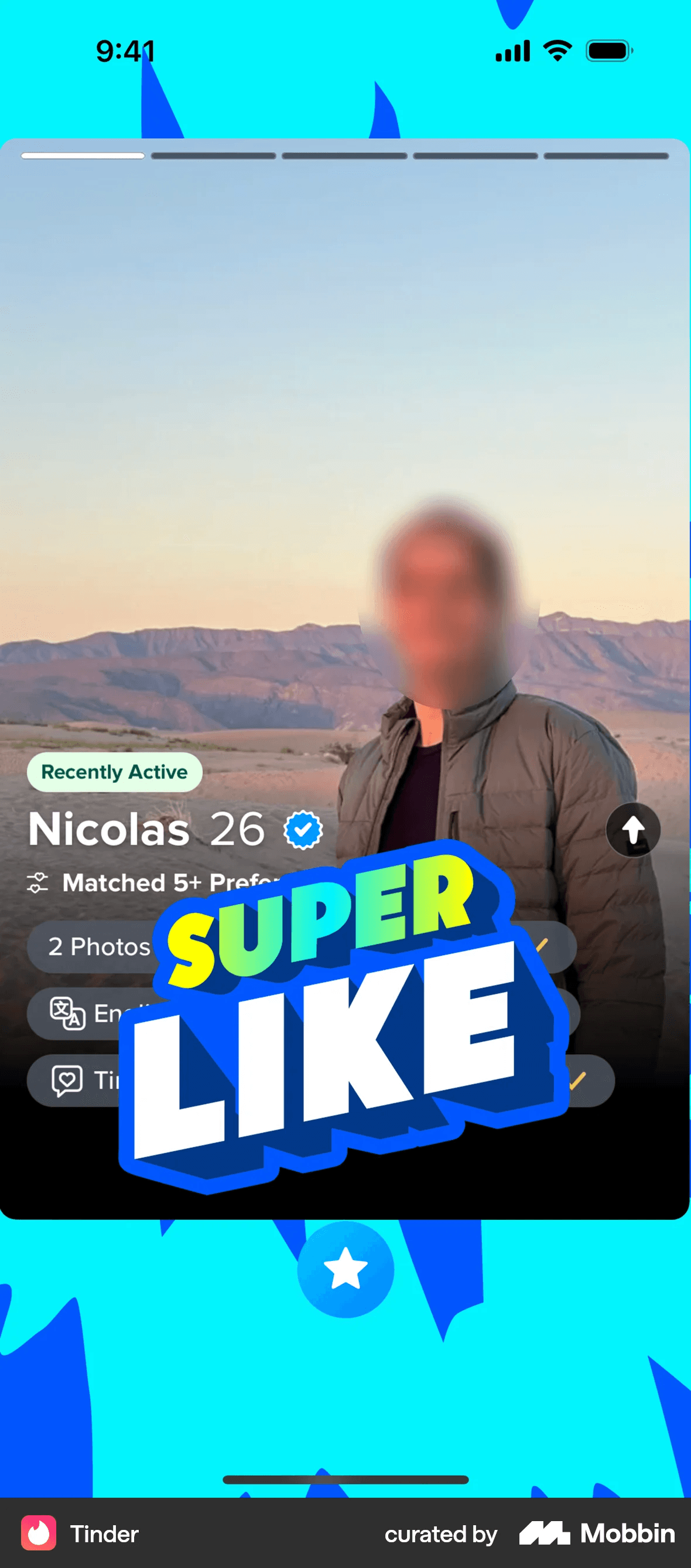
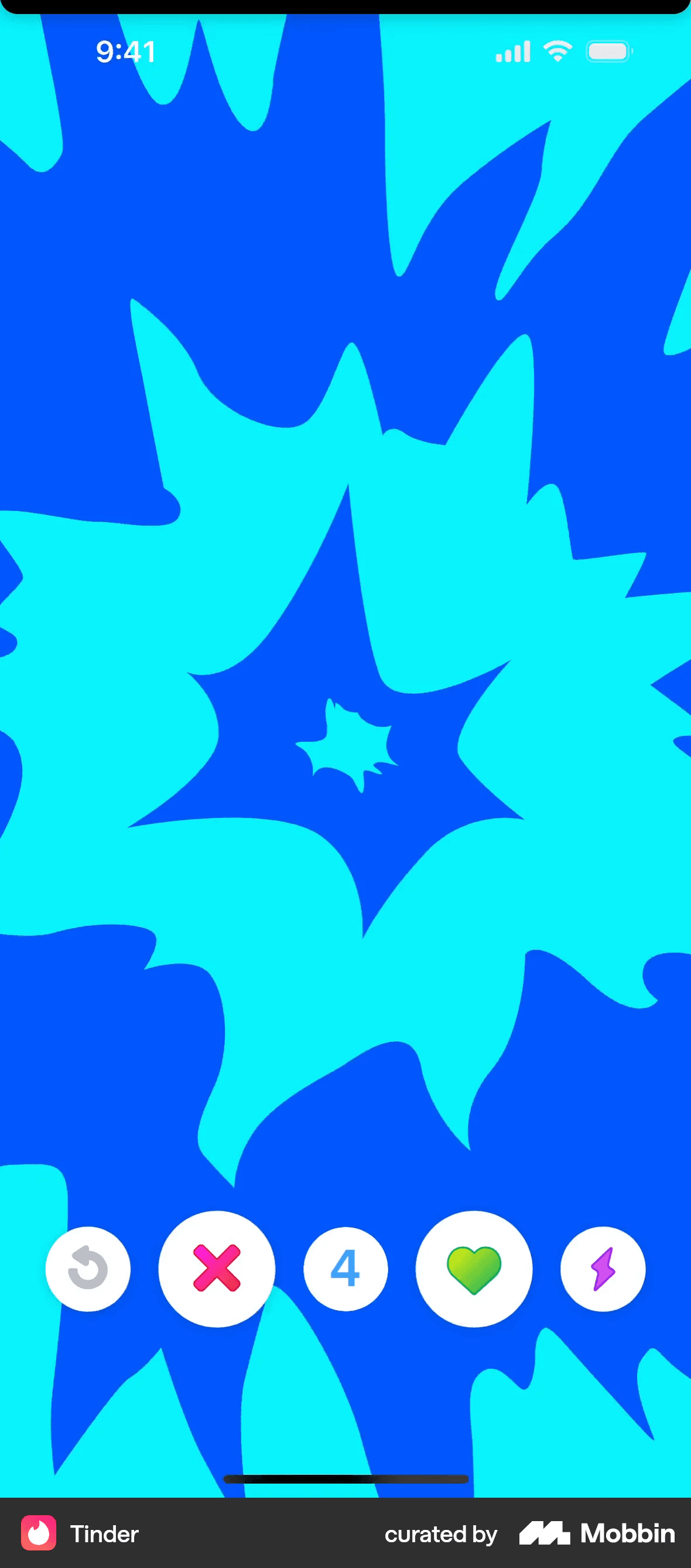
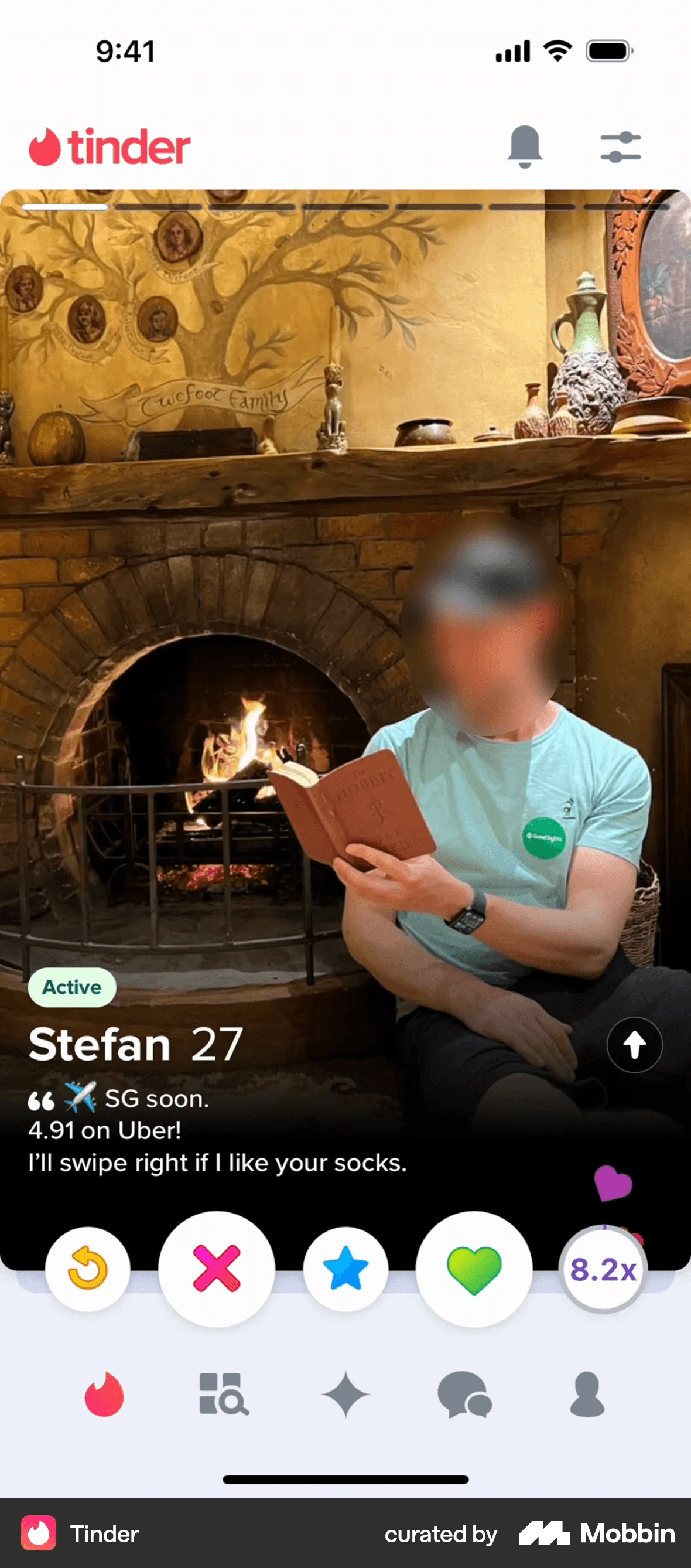
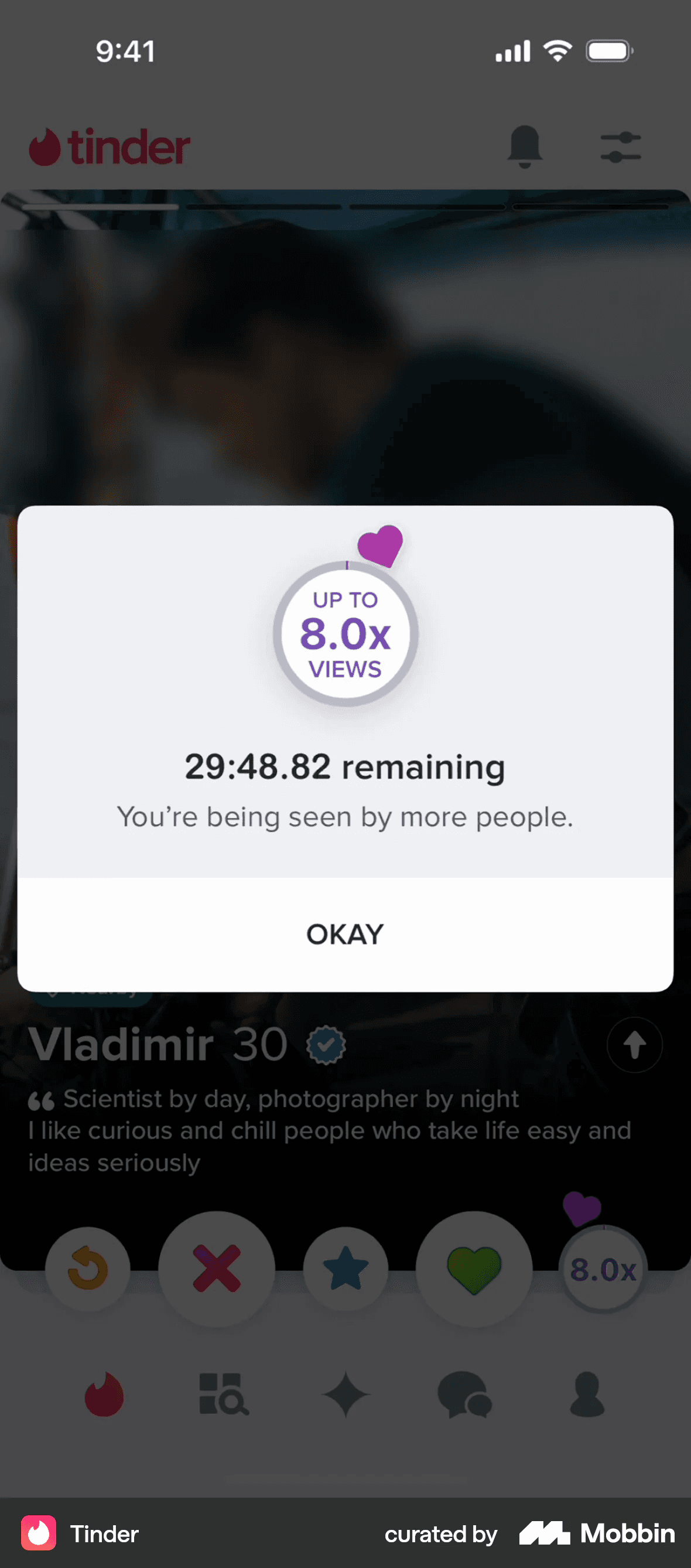
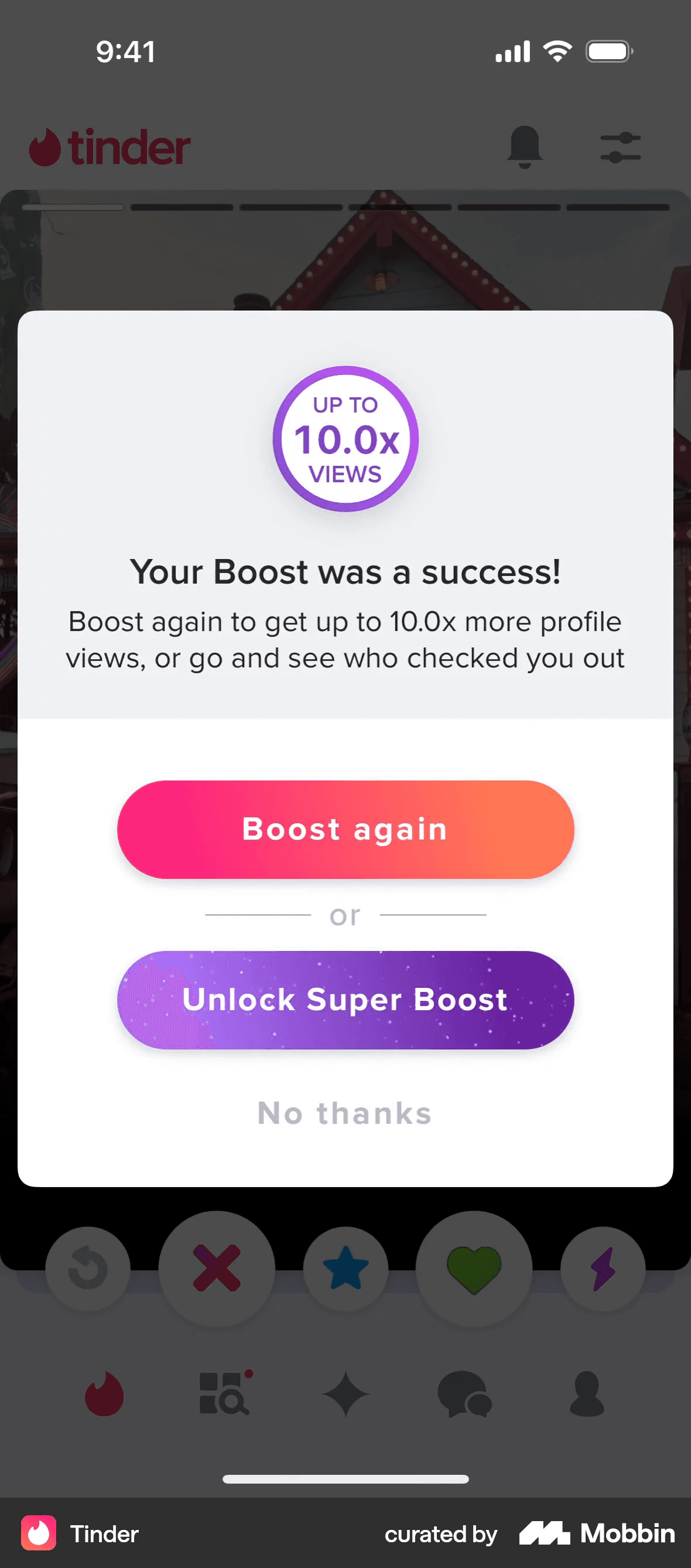
While this approach is arguably aligned with dating, where physical attraction plays a critical role, it doesn’t translate well to friendships. Friendships are rooted in shared interests, values, and genuine sparks of connection — less so on physical attraction. For Weave, I wanted to offer just enough visual context to humanize a profile, but shift the primary focus towards interests. I also aimed to minimize these game-like elements to prioritize authenticity and comfort for users seeking new friendships.
Bumble — Authenticity Focused
Bumble, in contrast, put more emphasis on authenticity and connection. Its onboarding began with asking for the user’s interests and even offers an ‘Opening Move’ feature to help jumpstart new connections. The app also had frequent identity verification to ensure users uploaded real photos of themselves, reinforcing trust, safety, and authenticity.
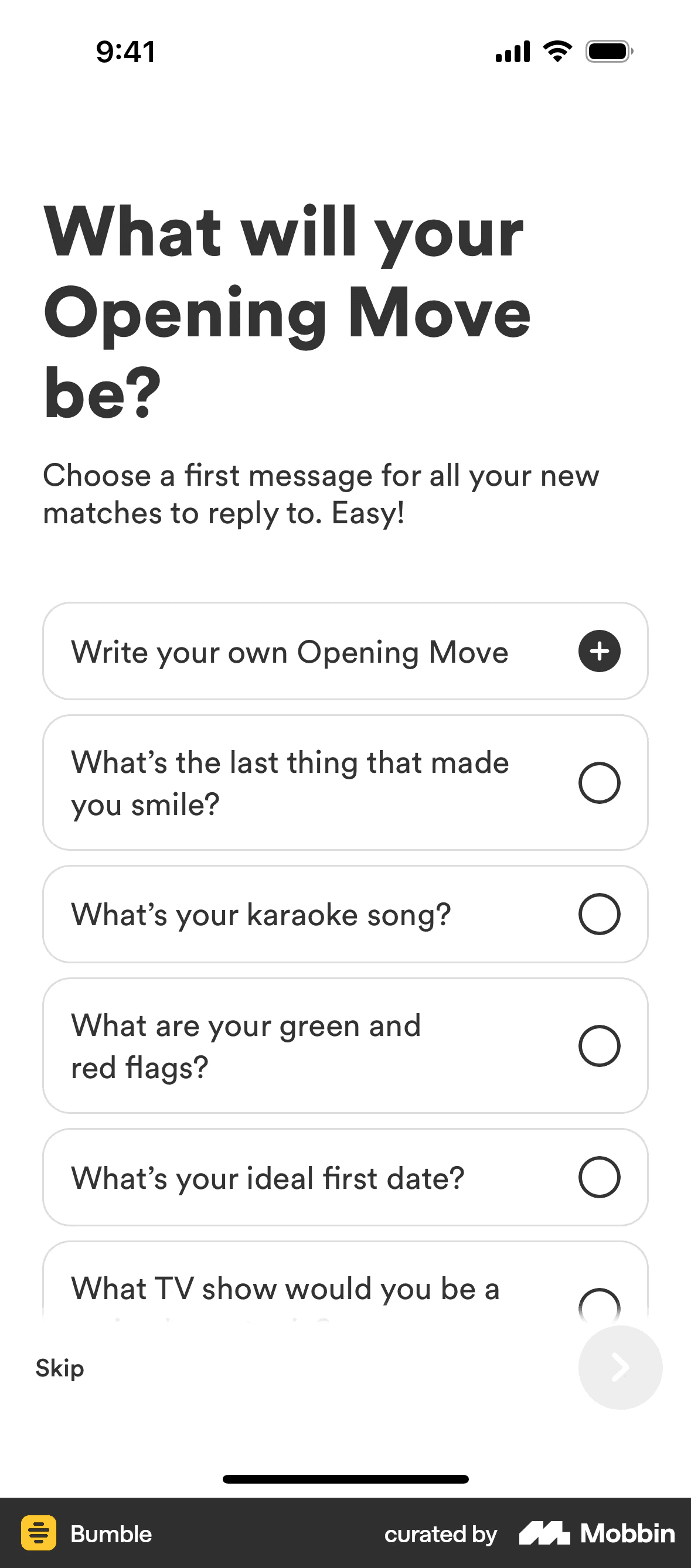
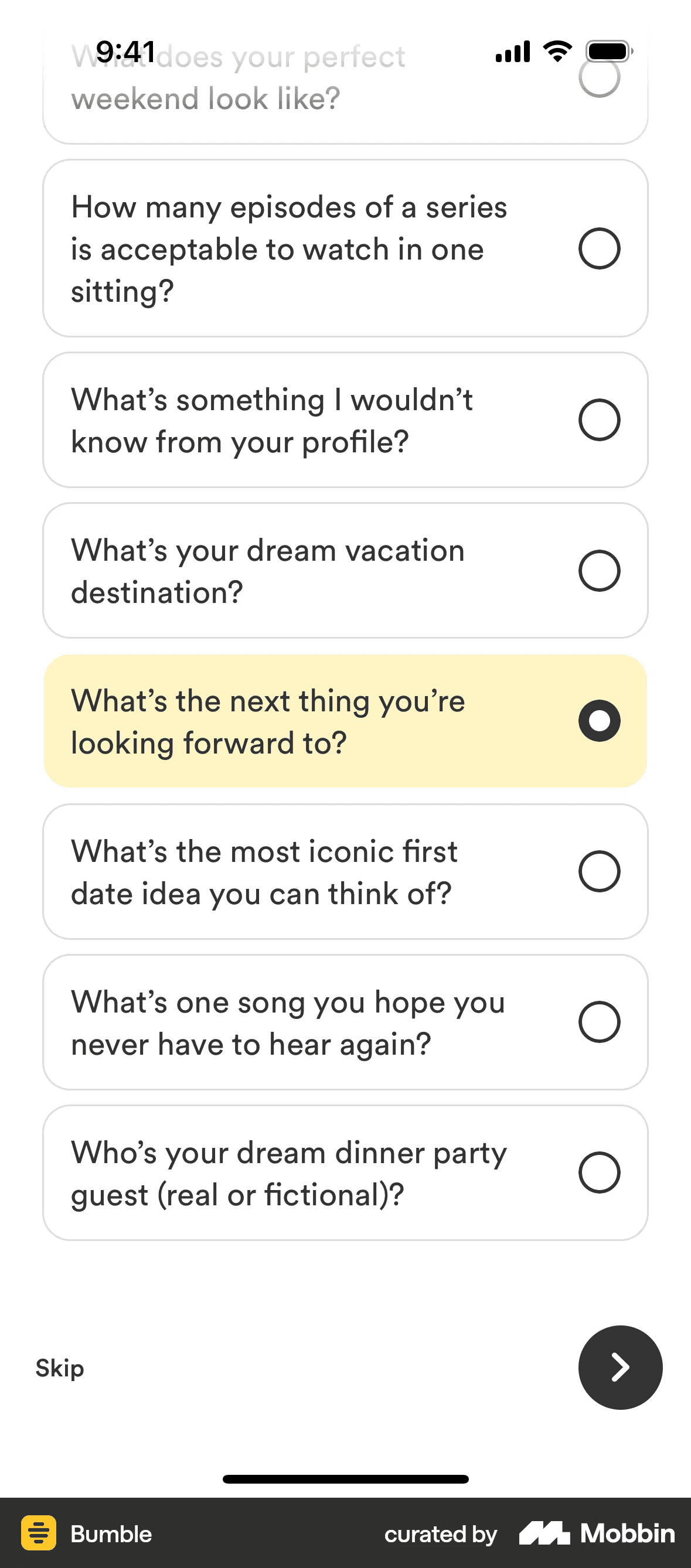
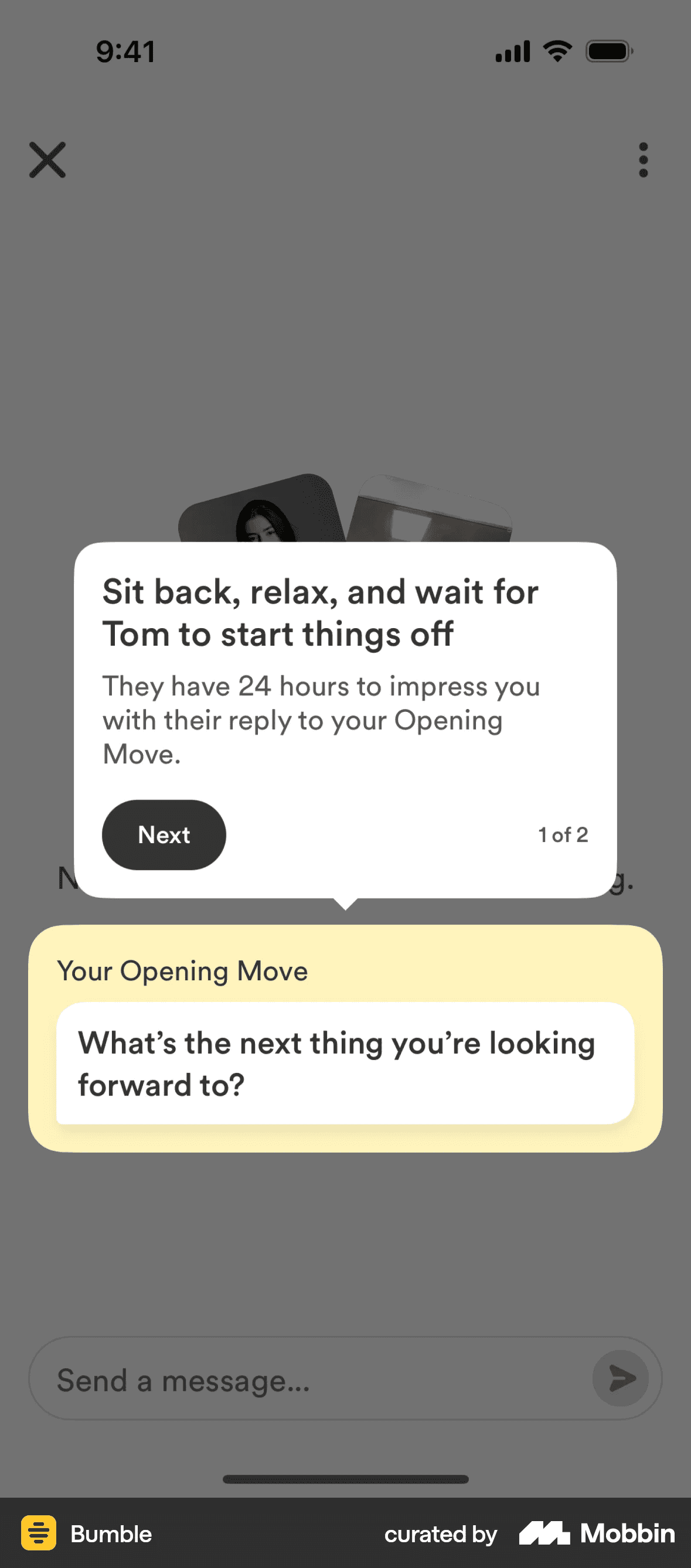
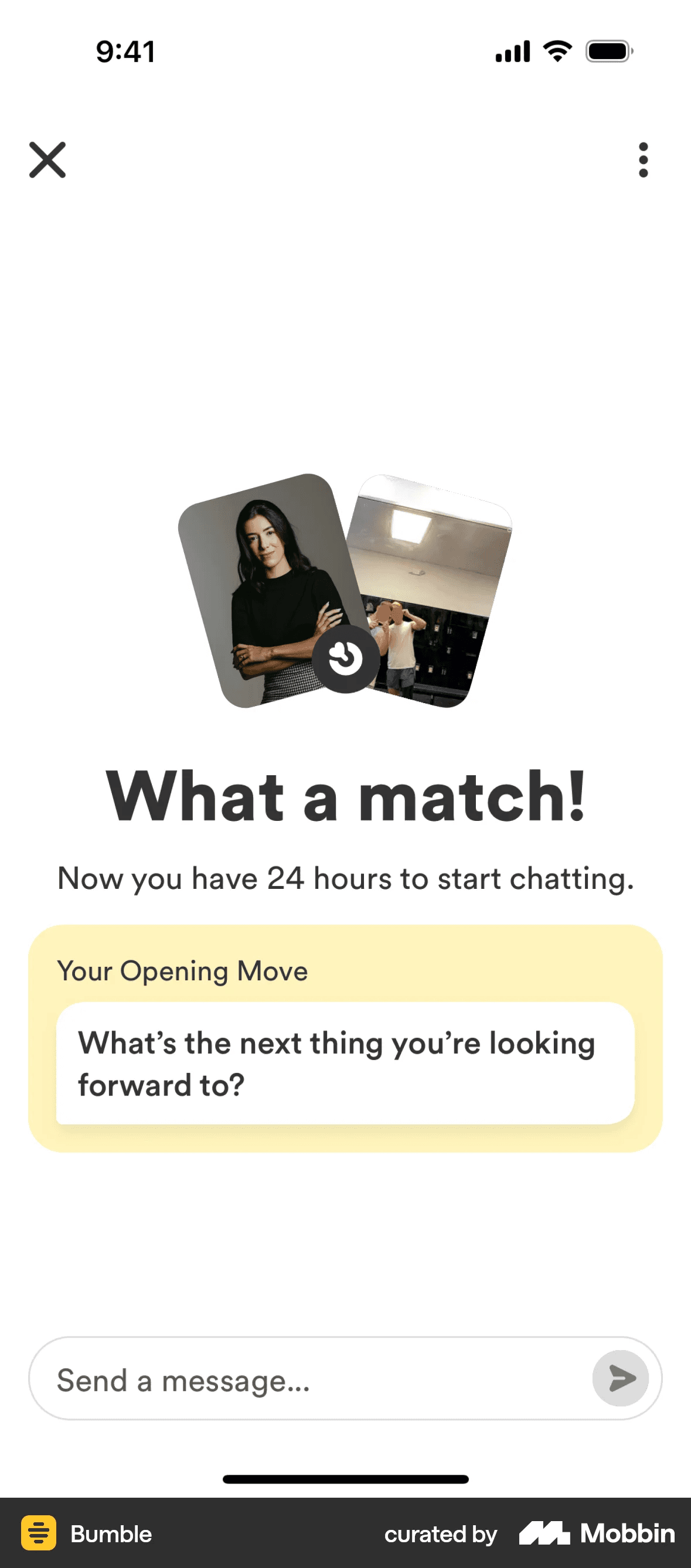
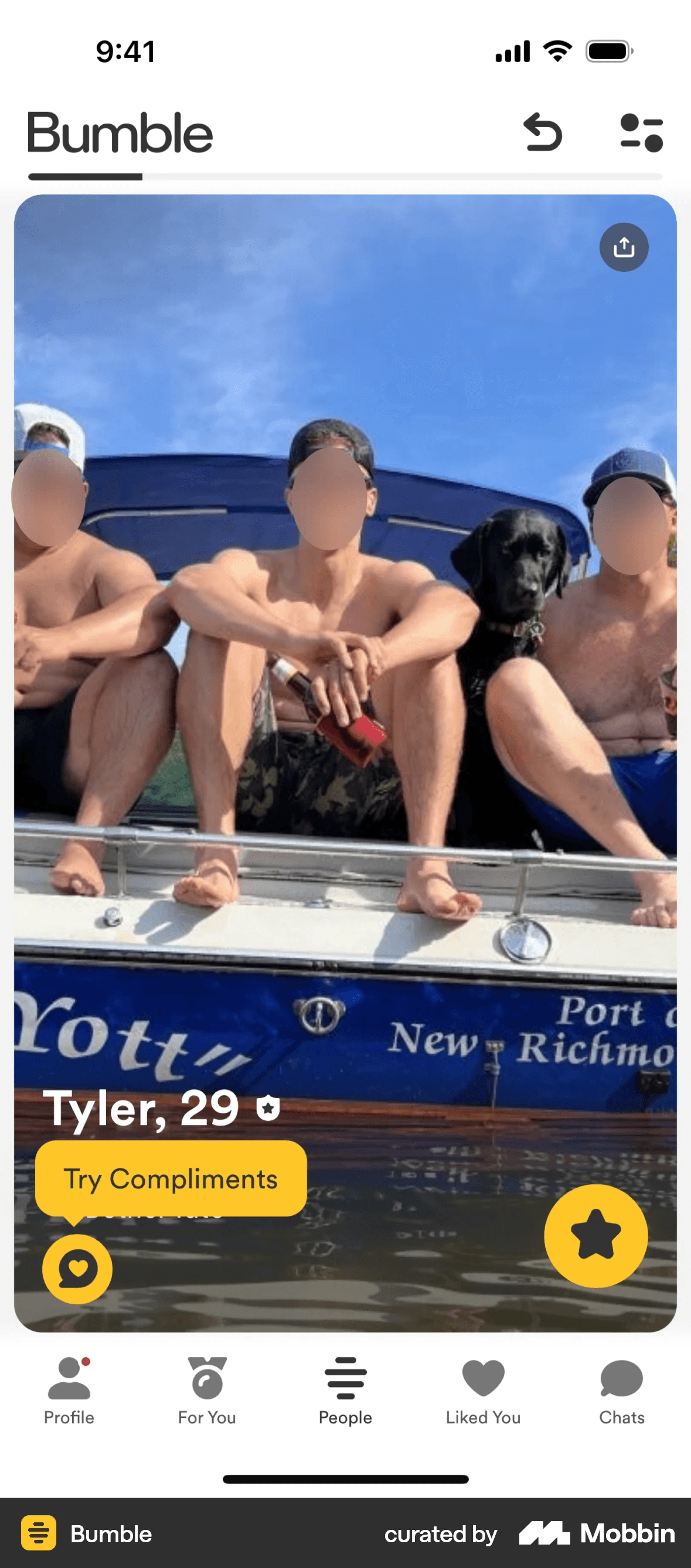
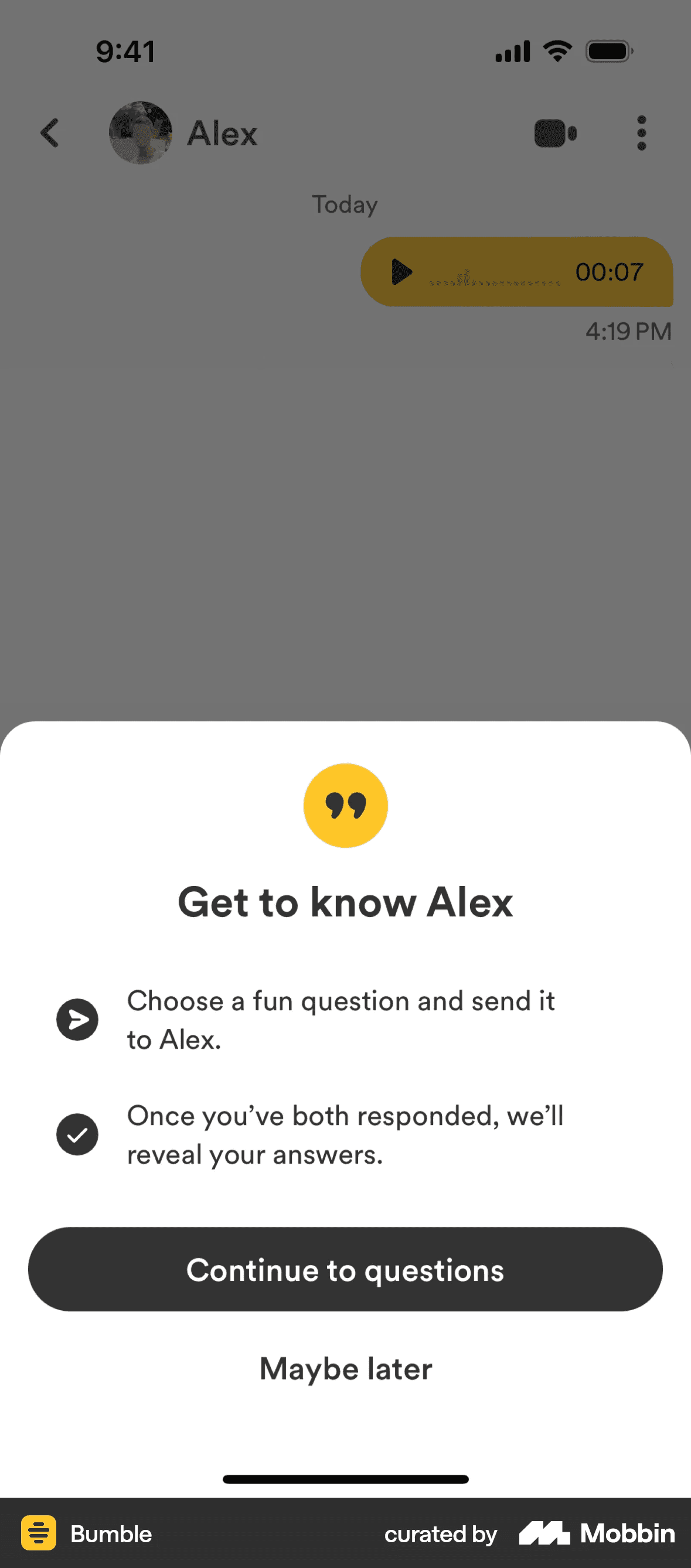
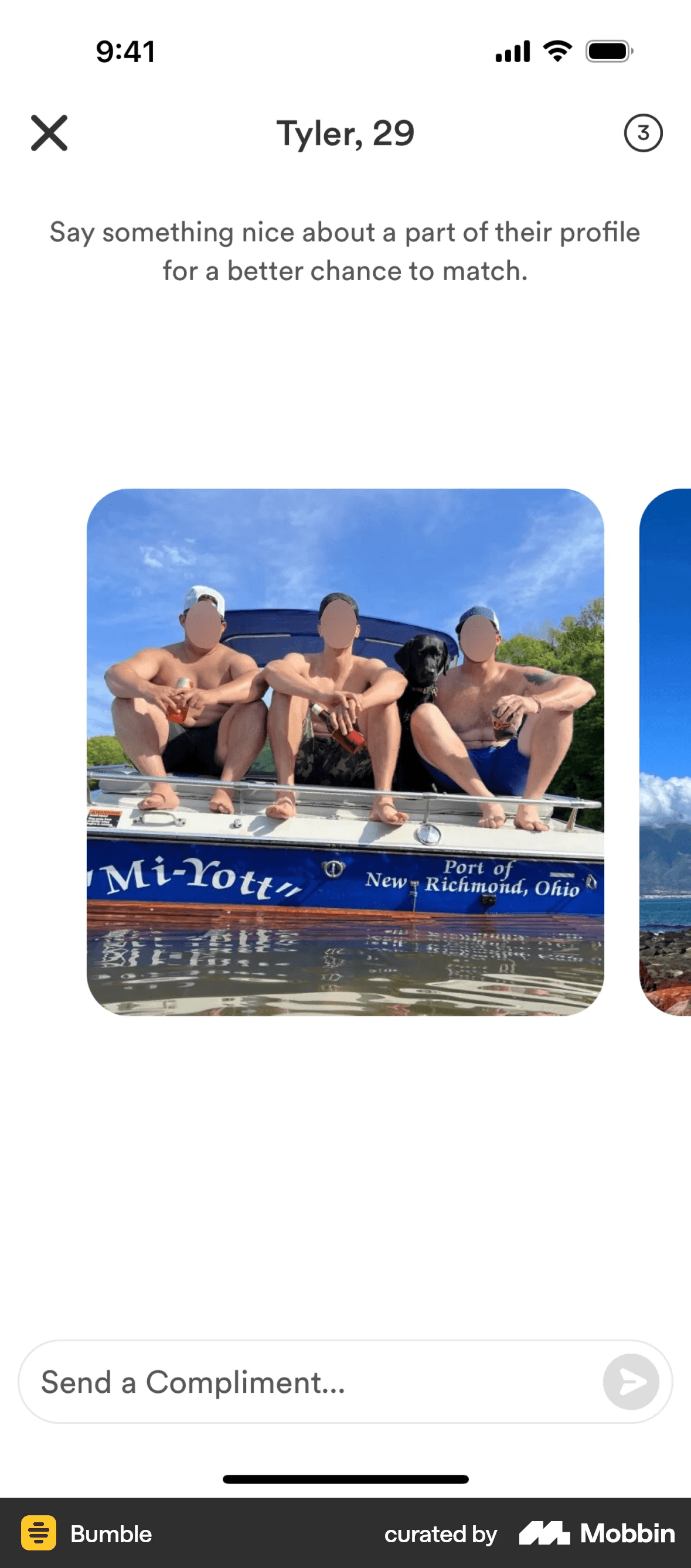
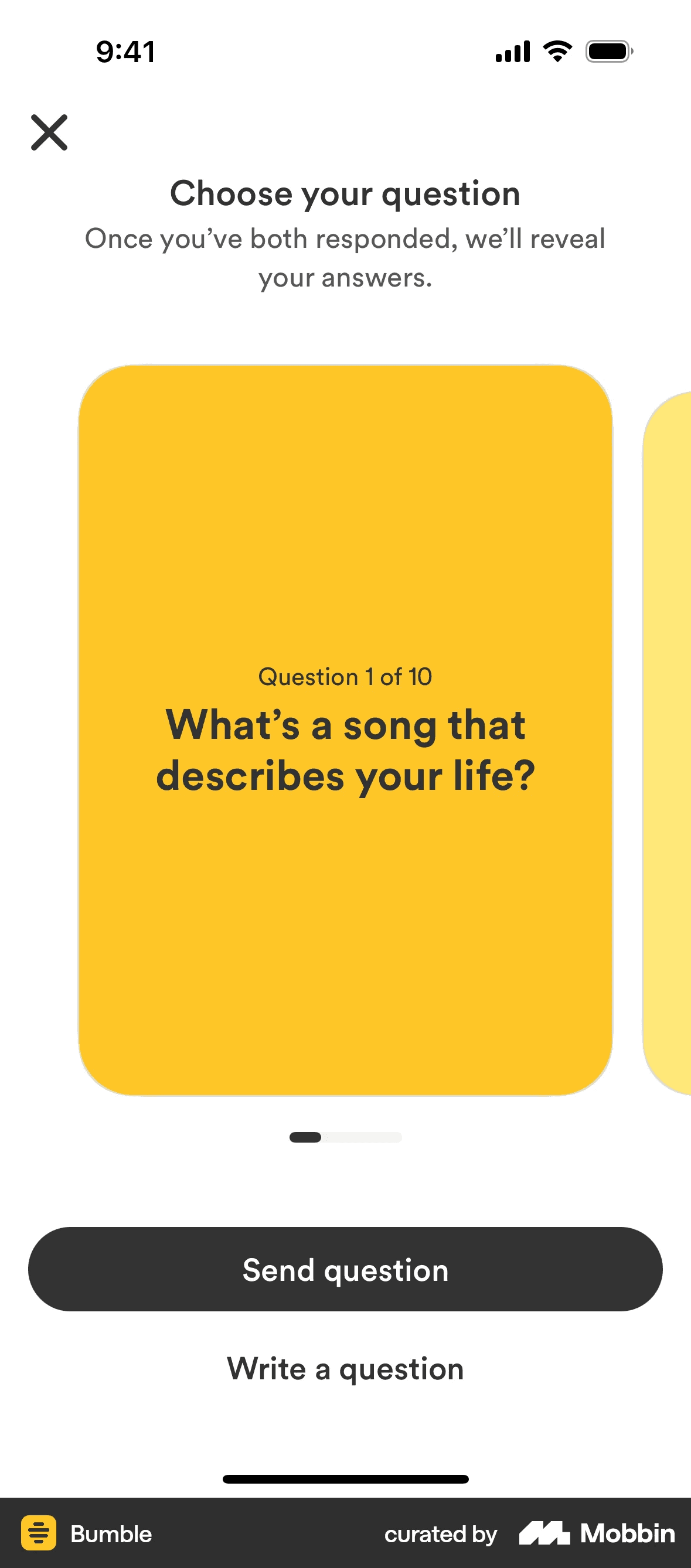
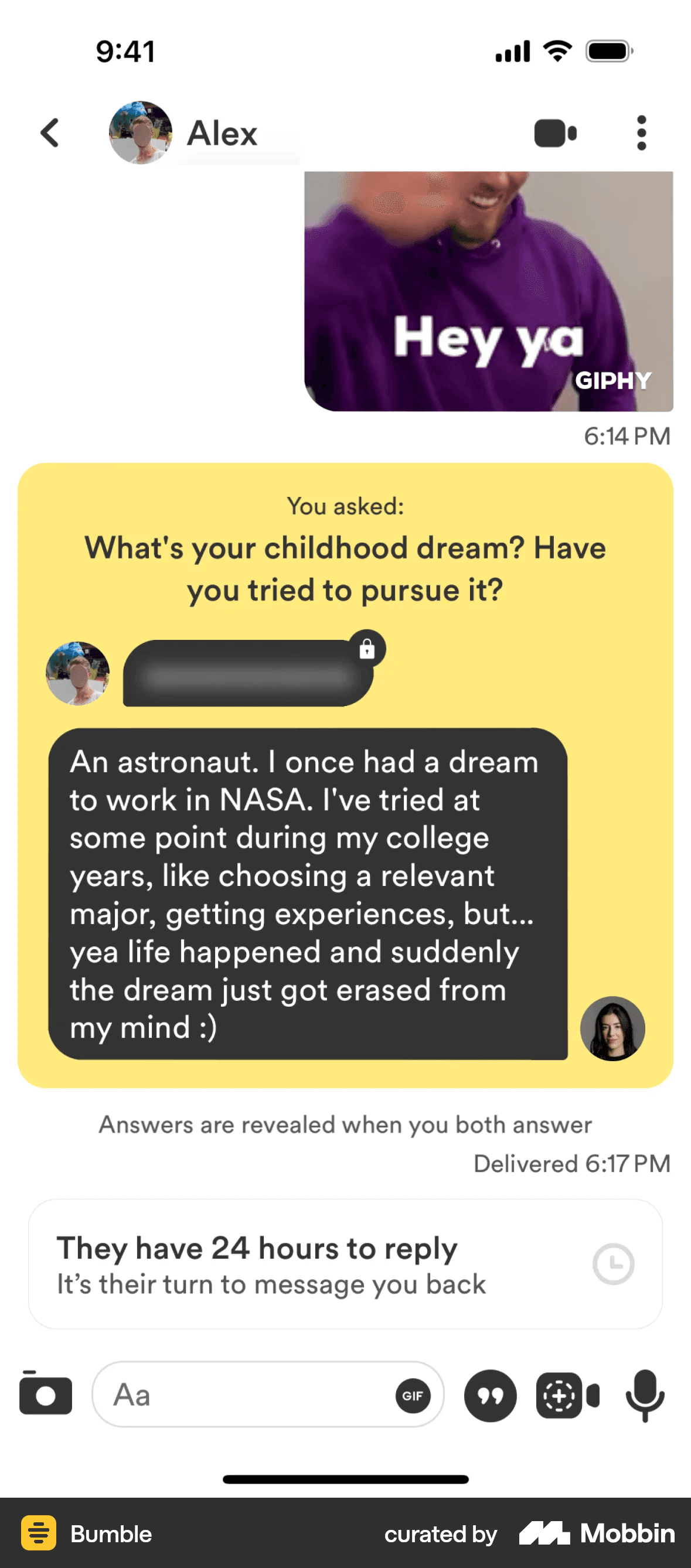
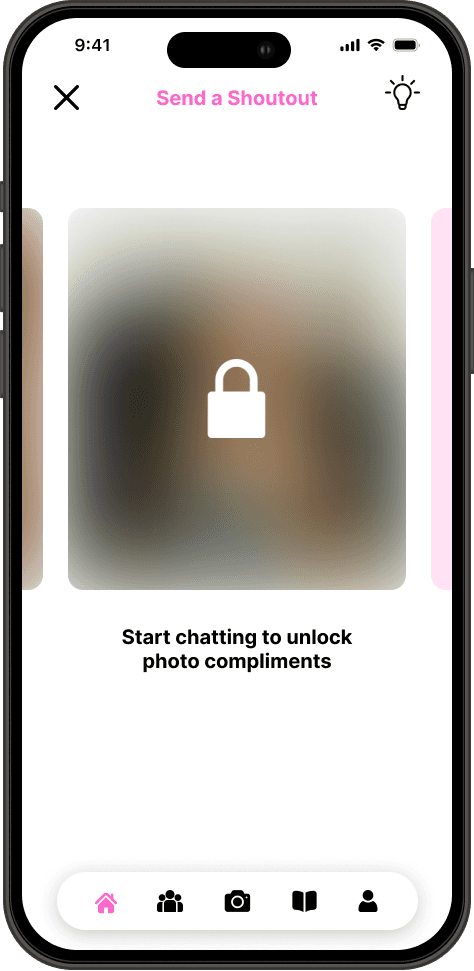
Where other dating apps lack, Bumble excels in fostering personality-driven connection through numerous conversation prompts like ‘fun questions’ that offer a glimpse into one’s character. These prompts encourage more meaningful conversations than photos and basic information can provide. The Compliments feature further solidifies by providing users with another point of conversation on photos and prompts. Taking inspiration from these elements, I incorporated them into my new design for Weave, as I wanted to encourage connection beyond surface-level judgements based on appearances.
Hinge — Intentional, Aesthetic, Conversation-Focused
Much like Bumble, Hinge focused mainly on connection. However, it offers a more polished, aesthetically-refined approach. Many of the users uploaded photos reminiscent of an Instagram feed, well-photographed and curated, rather than the body-focused photos on Tinder. While the experience felt more upscale compared to Tinder, I didn’t want to encourage picture-perfect profiles, especially as that was one of my main criticisms with Instagram.
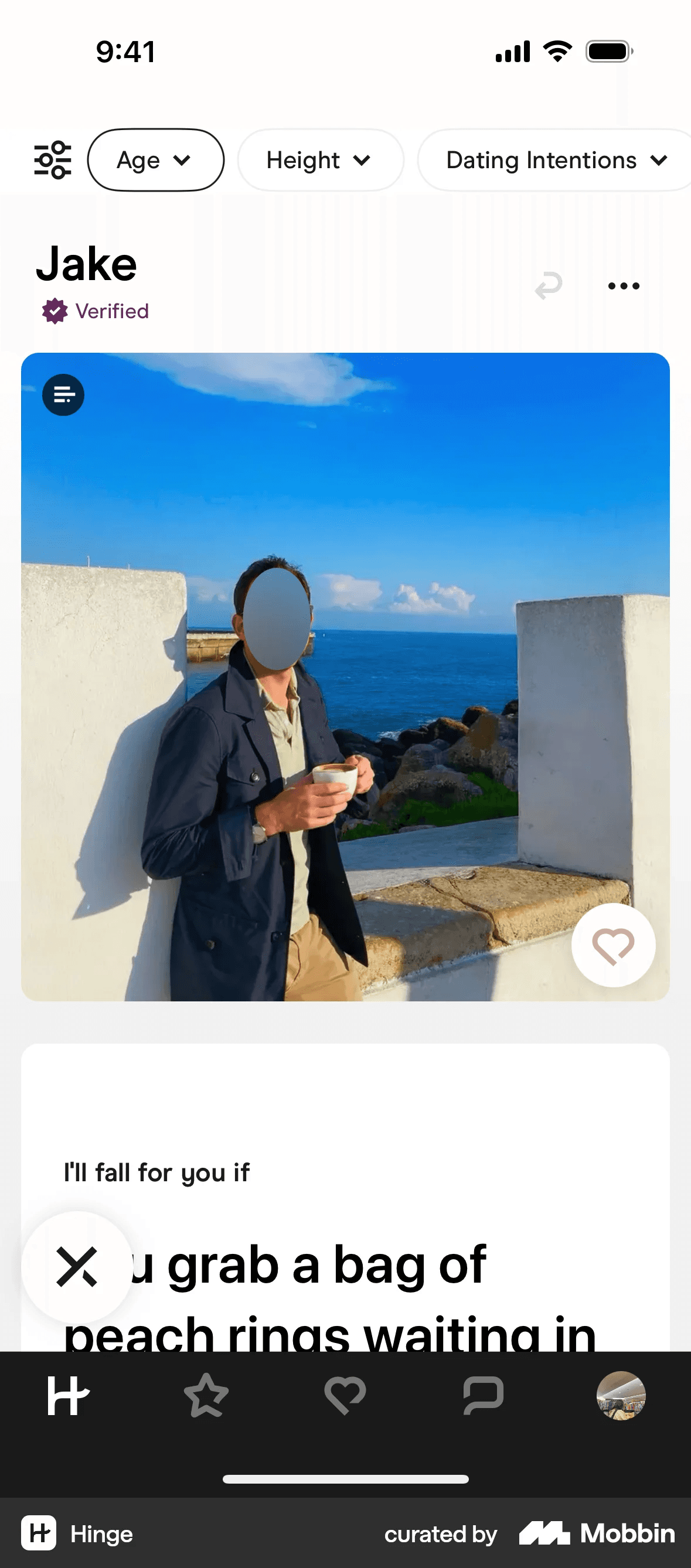
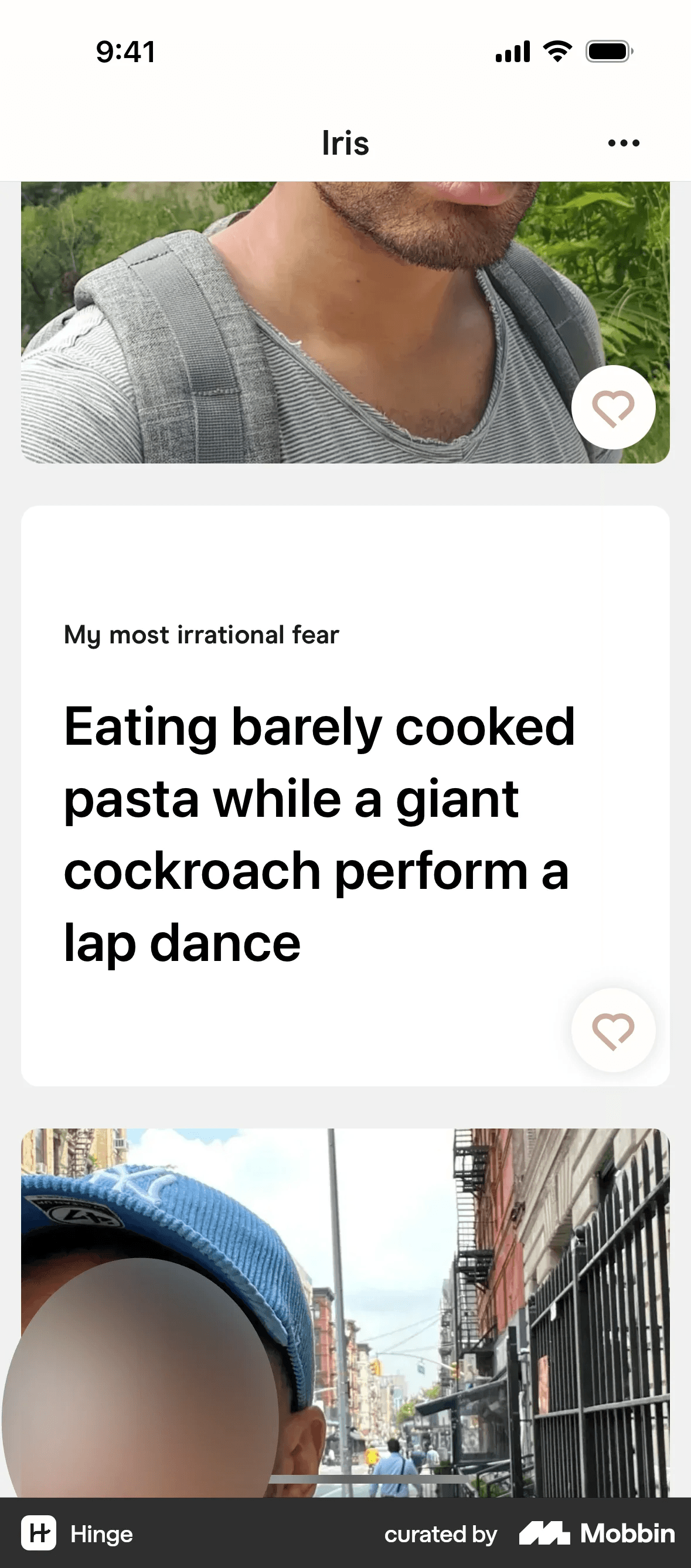
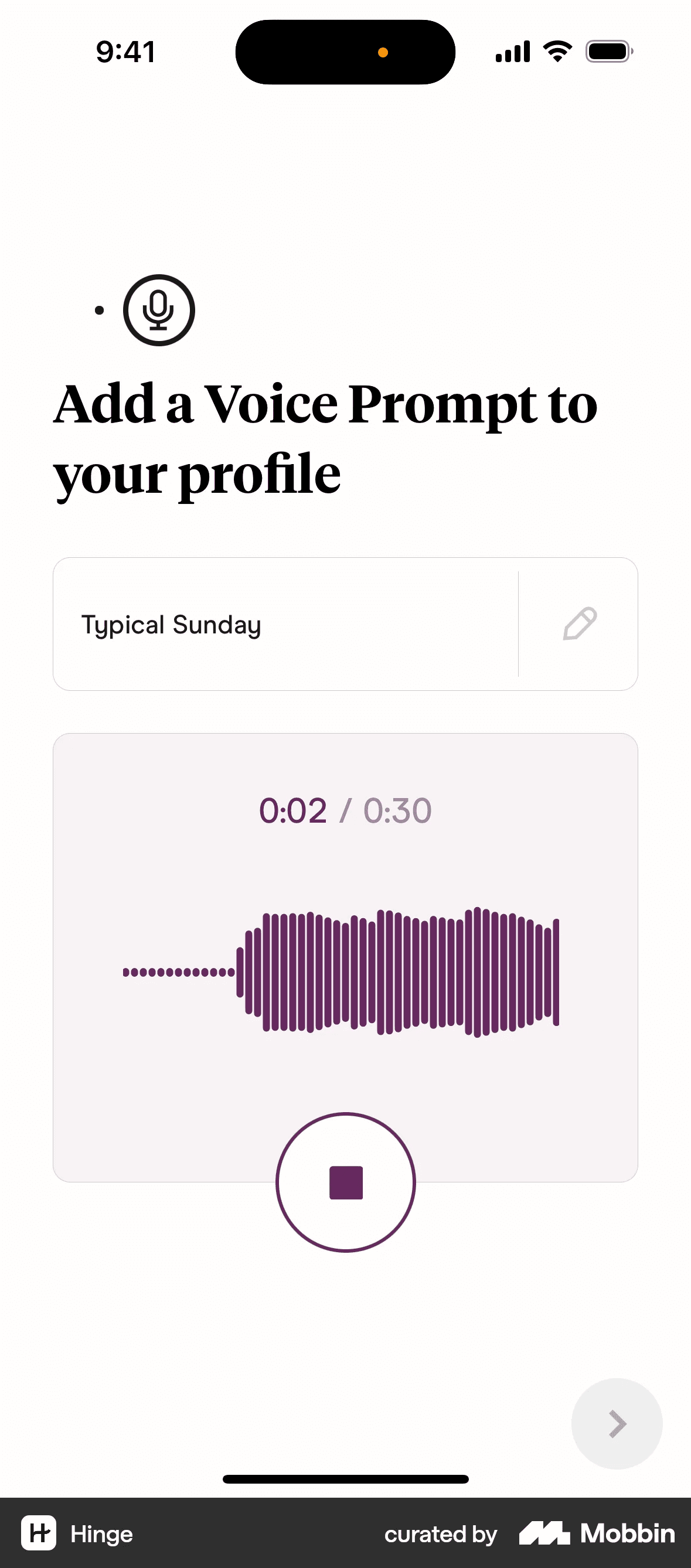
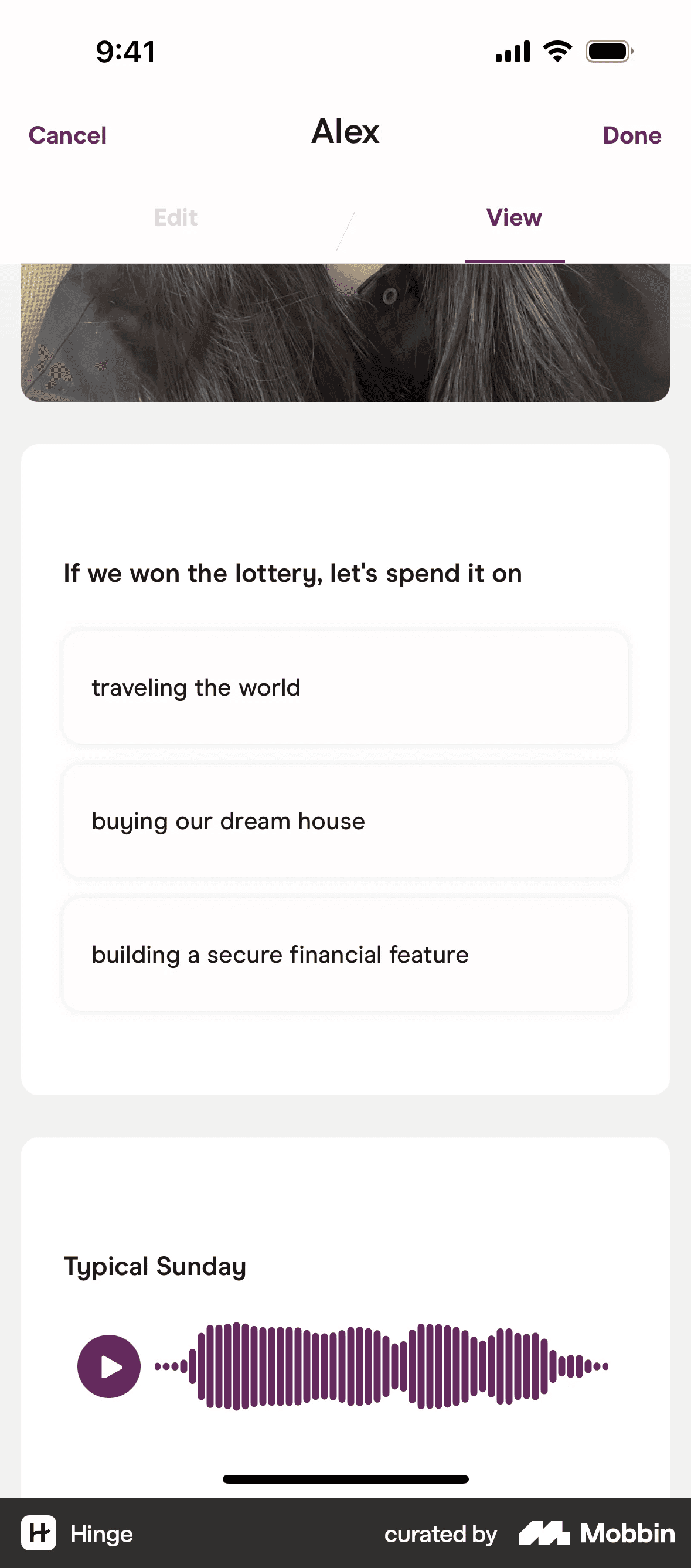
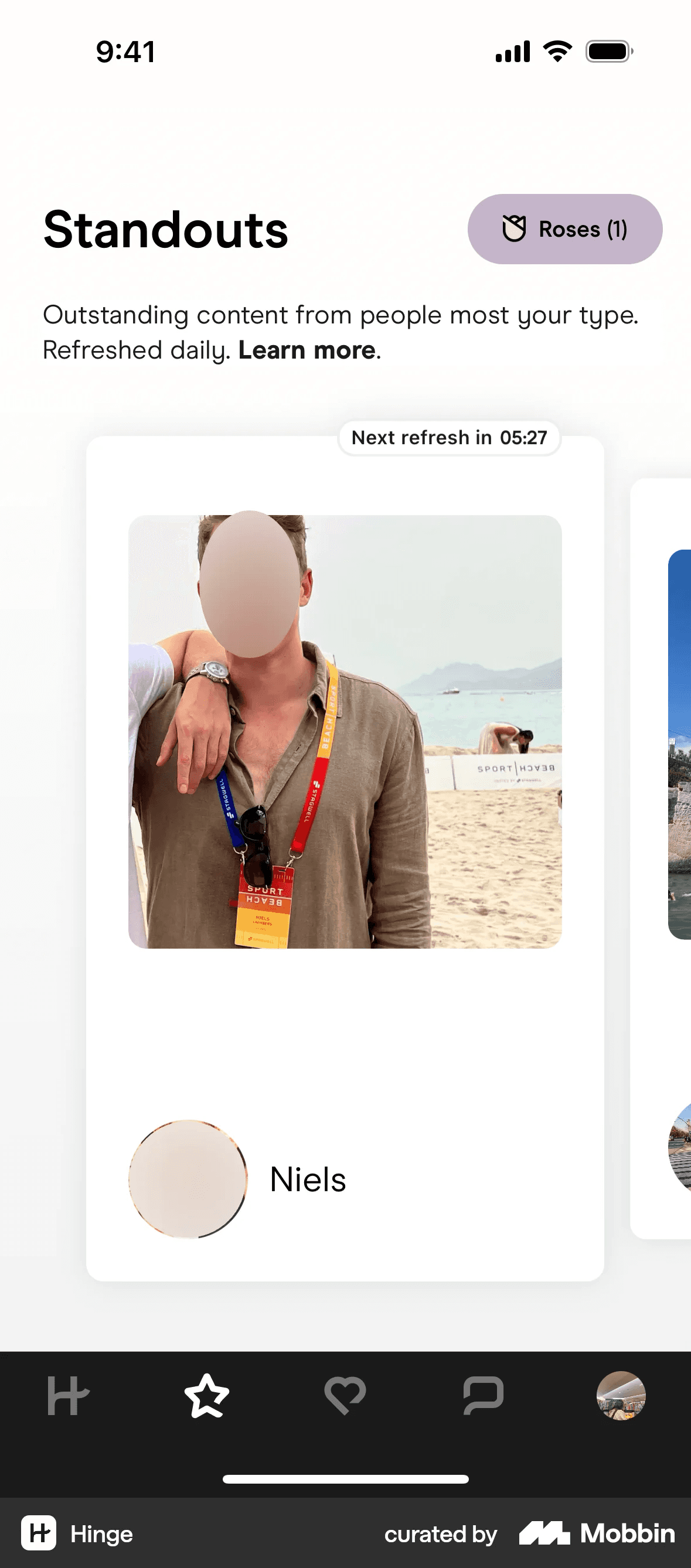
Subsequently, Hinge provides an extensive library of conversation prompts, like Bumble, but with an additional feature: voice prompts. These voice prompts enable users to showcase personality and humour in a more dynamic way that wasn’t restricted by the limitations of expression in text. In addition, the Standouts feature curates potential matches based on shared interests and preferences, allowing users to find compatible connections faster. For Weave, I adopted a similar interest-based filter, as the foundation of friendships is rooted in shared interests and passions. I also incorporated the voice prompts to aid users in showing the full depth and nuance of their character.
Friend-Focused Platforms — Yubo & Bumble for Friends
I also explored more friend-focused platforms like Yubo and Bumble for Friends to broaden my references. Surprisingly, Yubo seemed to heavily lean to fostering romantic relationships, despite being marketed towards friendship; its opposite-gender filtering and overtly flirtatious user culture created a hostile and uncomfortable environment for anyone seeking strictly platonic friendships. In contrast, Bumble for Friends seemingly offered a more genuine experience, with profiles from users — typically of the same gender — who appeared sincerely interested in forming friendships.
The Redesigned Weave
Analyzing all of these apps clarified what Weave needed to become: a platform that values intentionality, fosters genuine connection, and lowers social friction — without leaning on gamification or appearance-driven interactions. By merging the strongest elements from these existing platforms and ignoring their shortcomings, I began shaping Weave into a platform that supports both building and maintaining friendships in a thoughtful, user-centered way.
One-to-One Connections
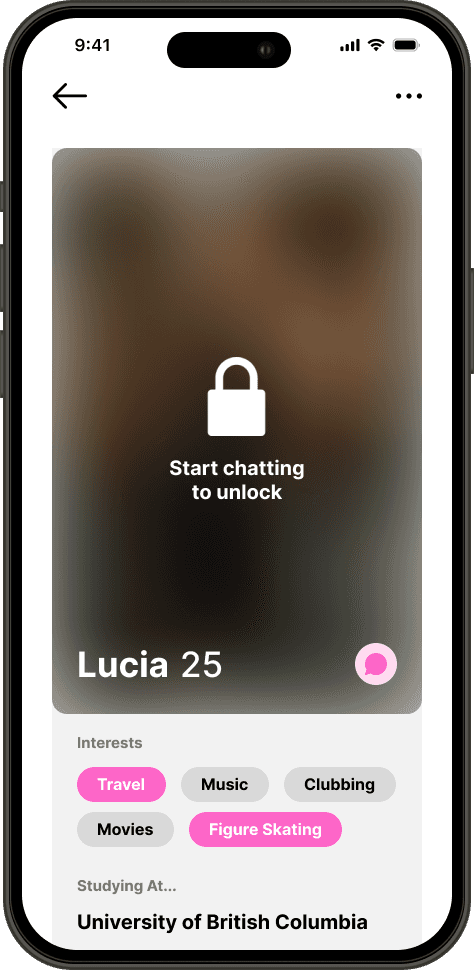
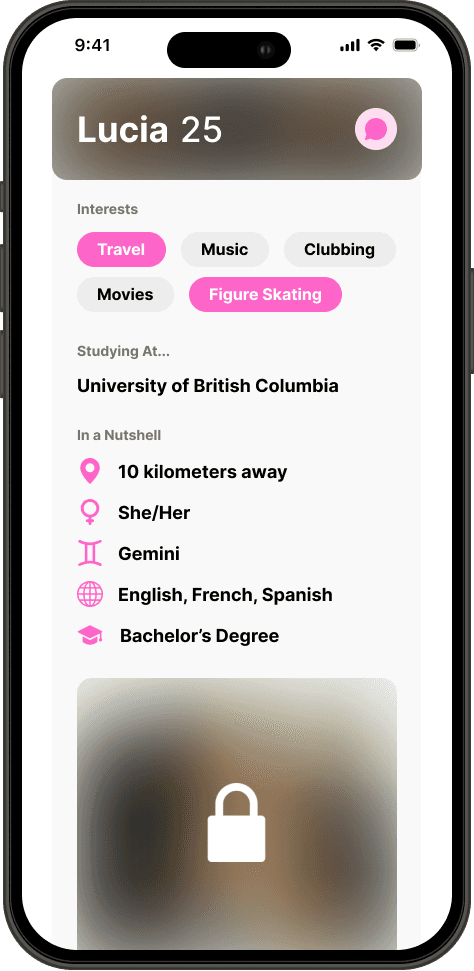
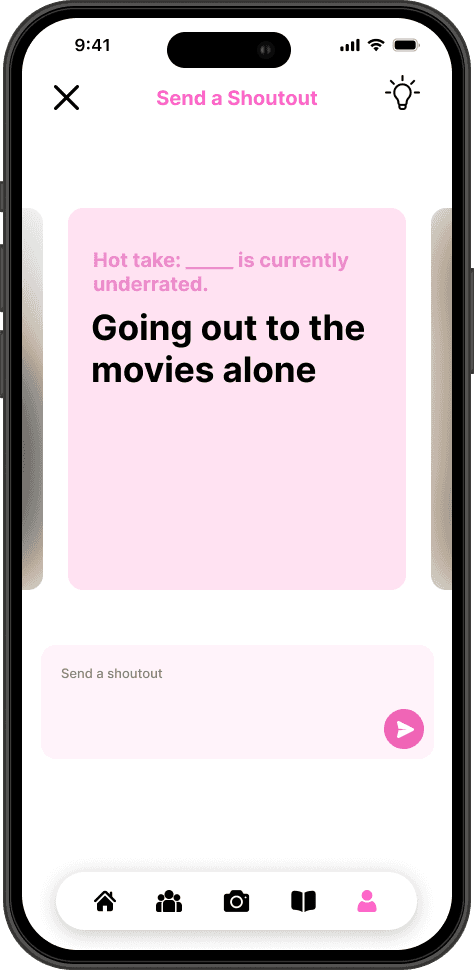
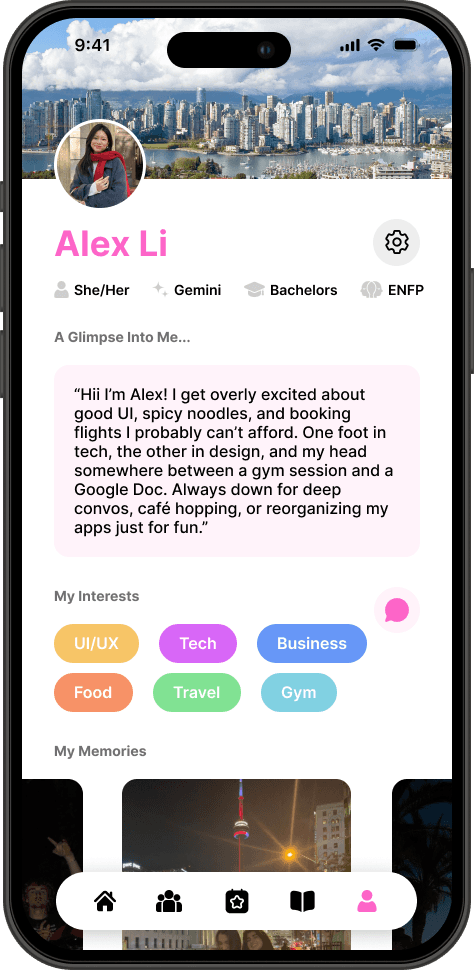
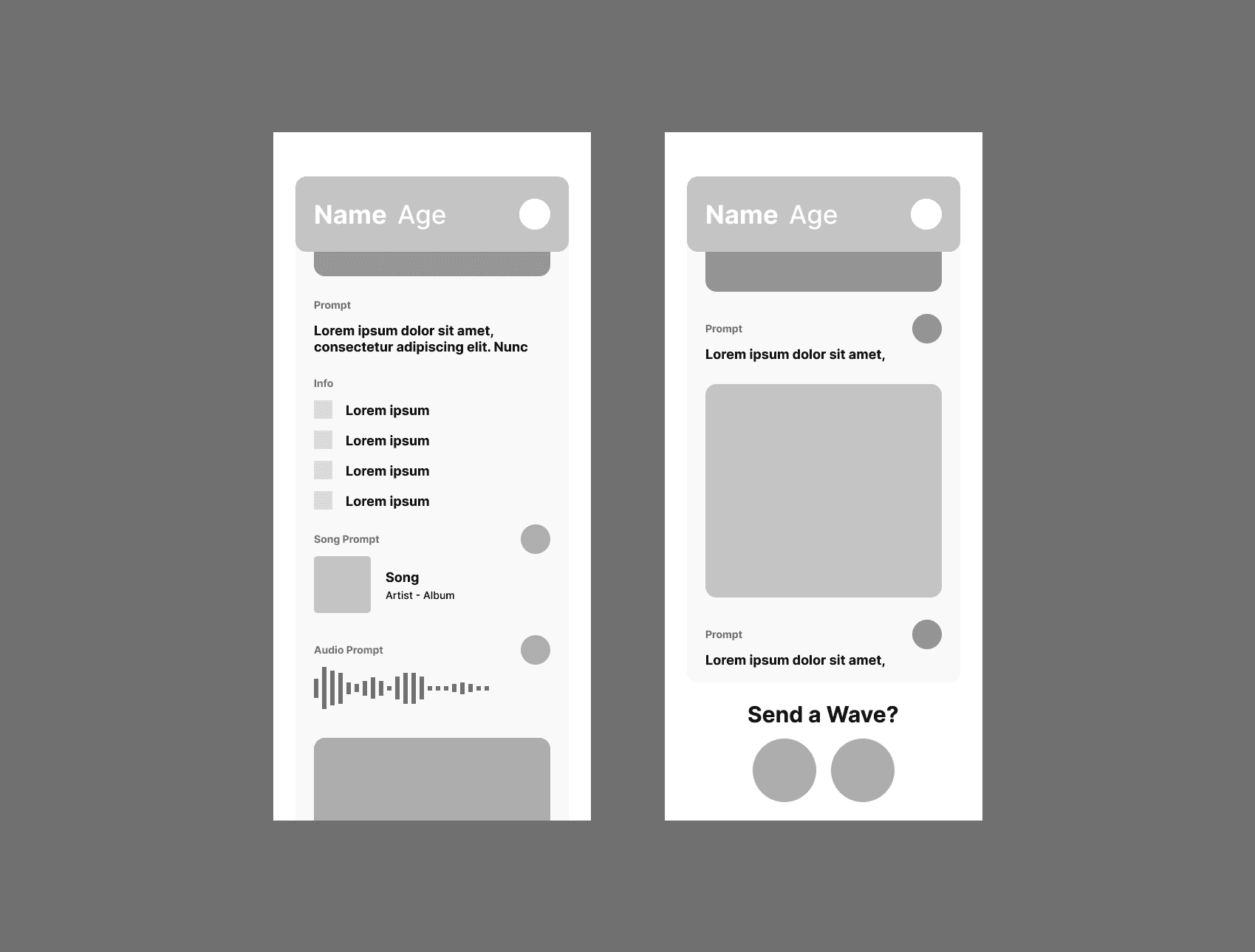
For one-to-one connections, I drew inspiration most from Hinge and Bumble, which encouraged users to share meaningful insights into their personalities. Weave includes foundational details, such as gender, age, education level, and spoken languages, but the focus extends beyond the basics. I incorporated the text and voice-based prompts of Hinge and Bumble give users a fuller understanding of one’s personality and provide a glimpse into what kind of potential friend they may be.
In addition, I replaced the term “Match” with “Send a Wave” to remove any romanticisms when forming a new connection, as it feels friendlier and more fitting for a platform centered around platonic friendships.
Group Connections
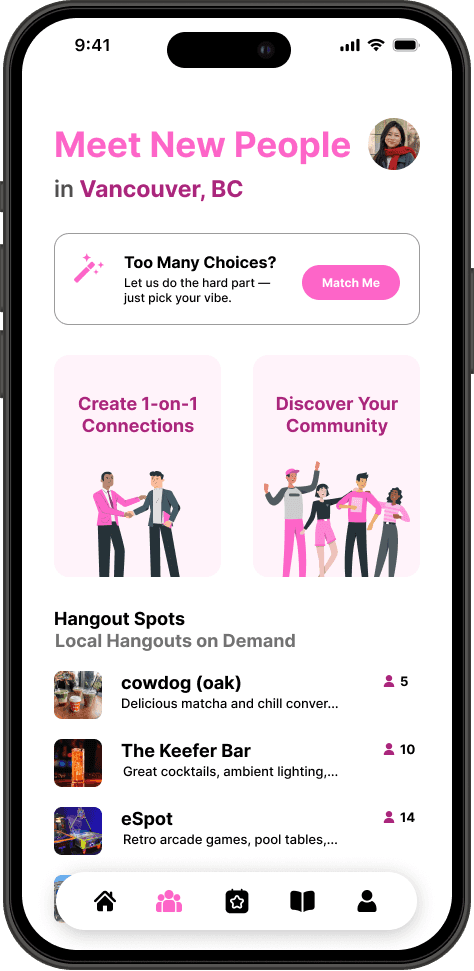
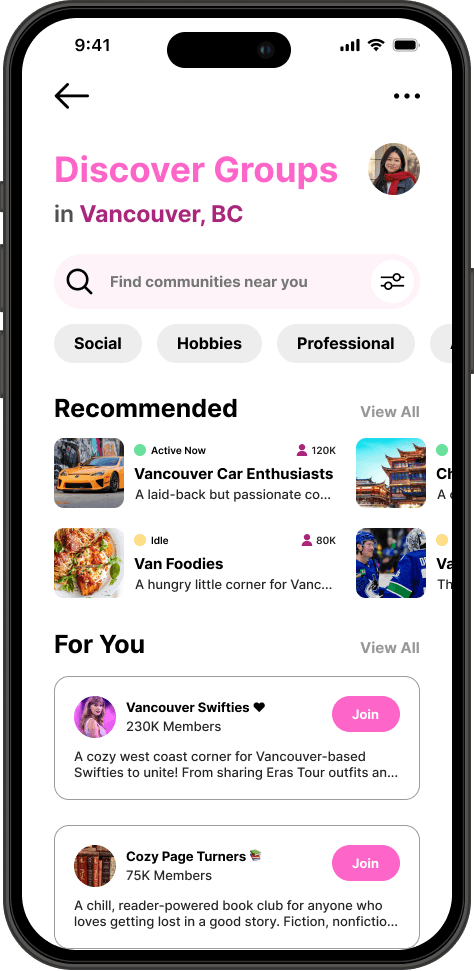
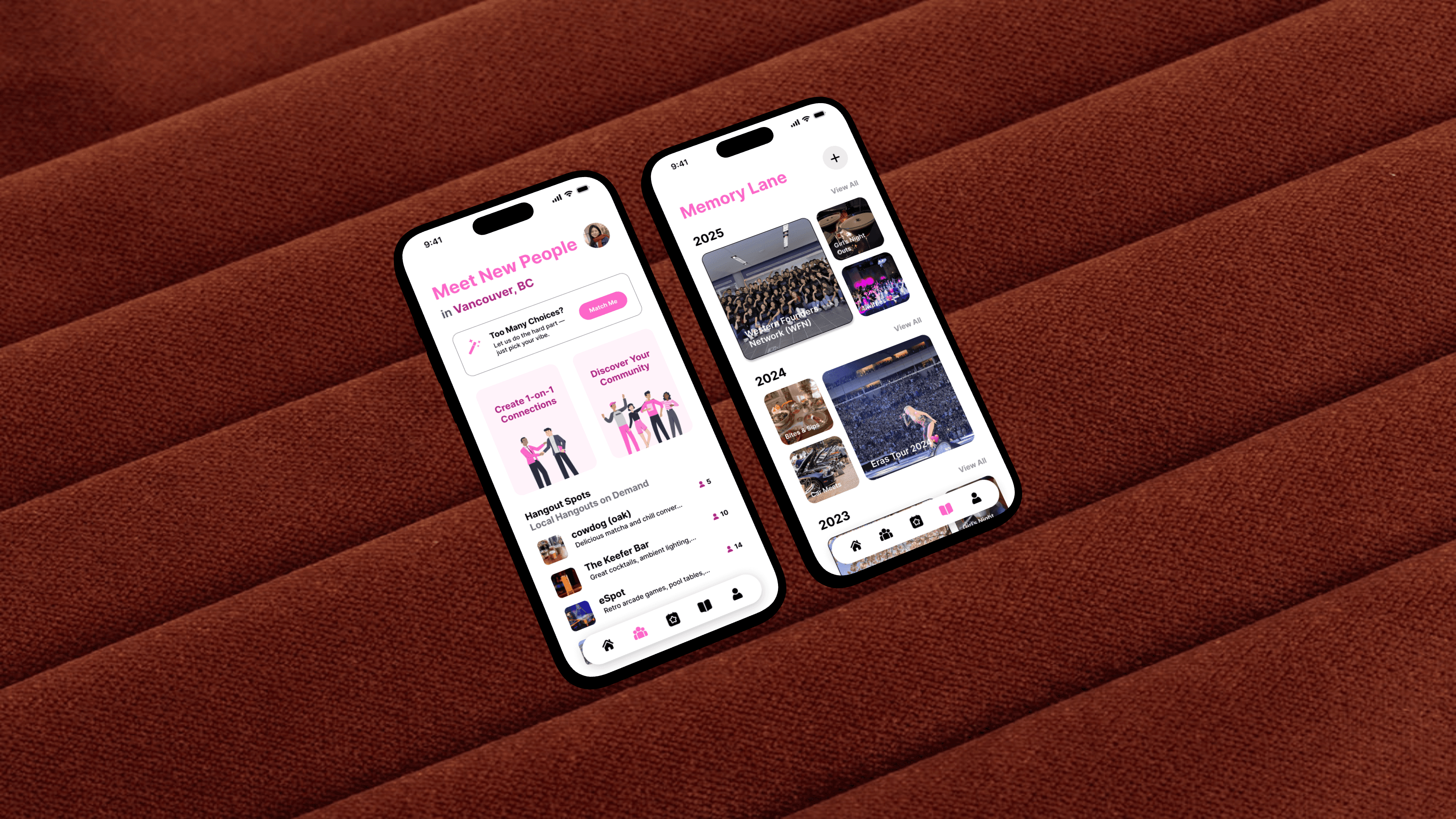
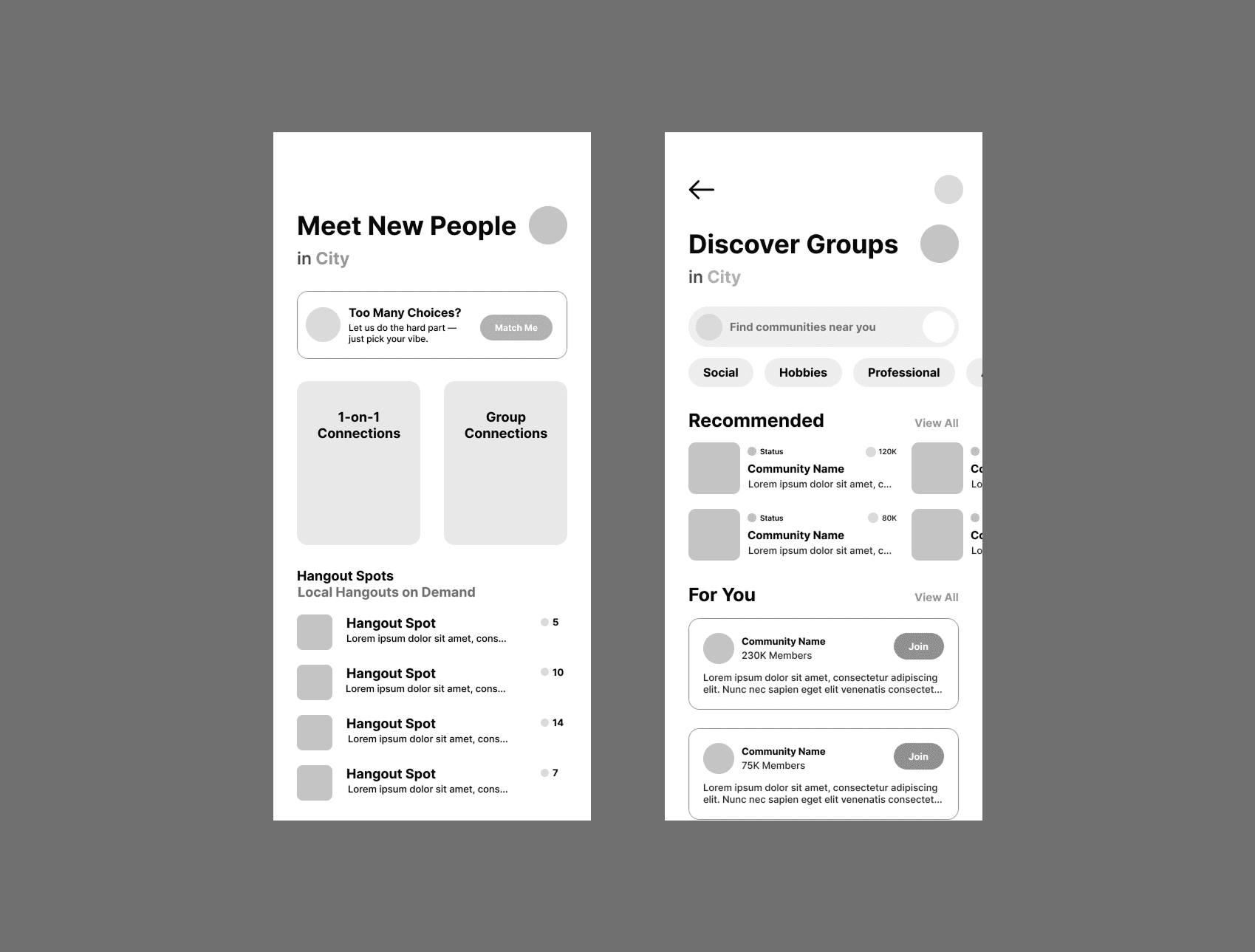
As for group-based connections, I introduced a community discovery feature inspired by apps like Reddit, Facebook Groups, Discord, and Meetup. Weave recommends popular communities, suggests groups based on the user’s interests, and provides topic-based filters for users looking for something more specific. Each community displays an activity status so users can gauge liveliness of the community before joining.
Users can also discover local hangout spots and see the number of people at each location. These spaces serve as ongoing, low-pressure invitations, perfect for those wanting to make new friends without the additional pressure or hassle of attending events and activities. As someone who once struggled to meet new people, I understand how valuable it is to have a place where you can simply show up, be yourself, and strike up a conversation without expectations, costs, or prerequisites.
Events & Shared Experiences
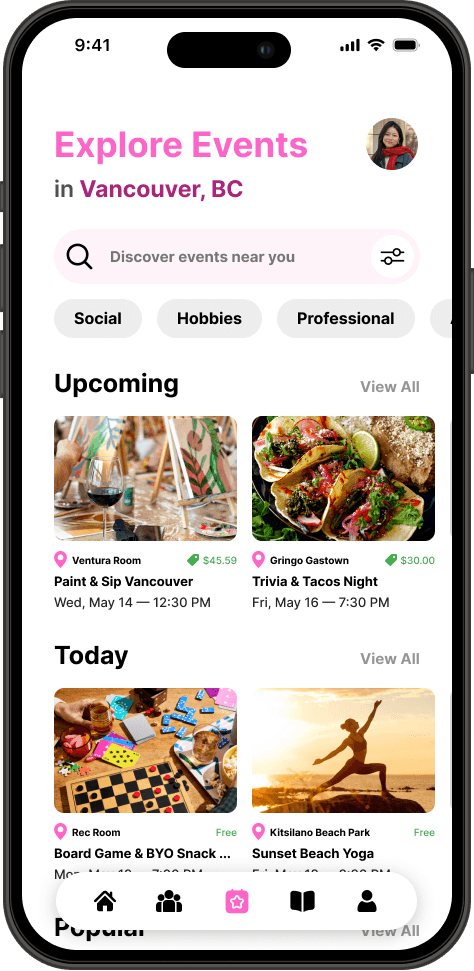
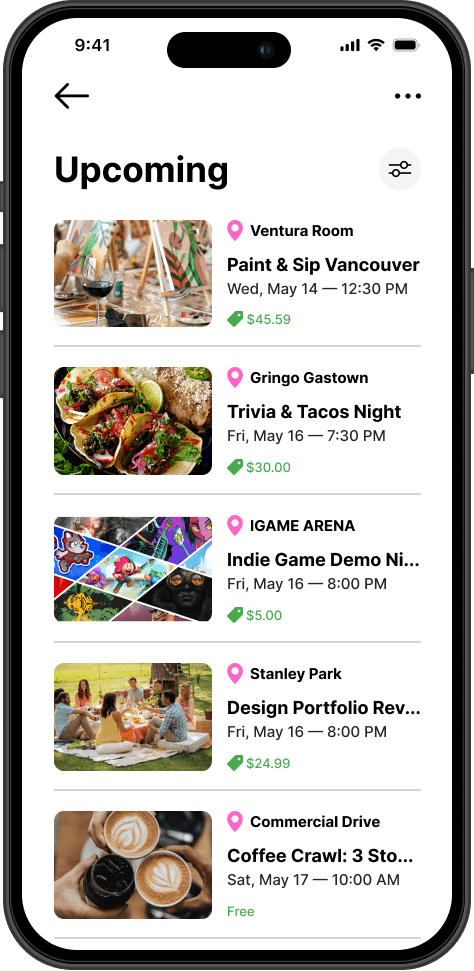
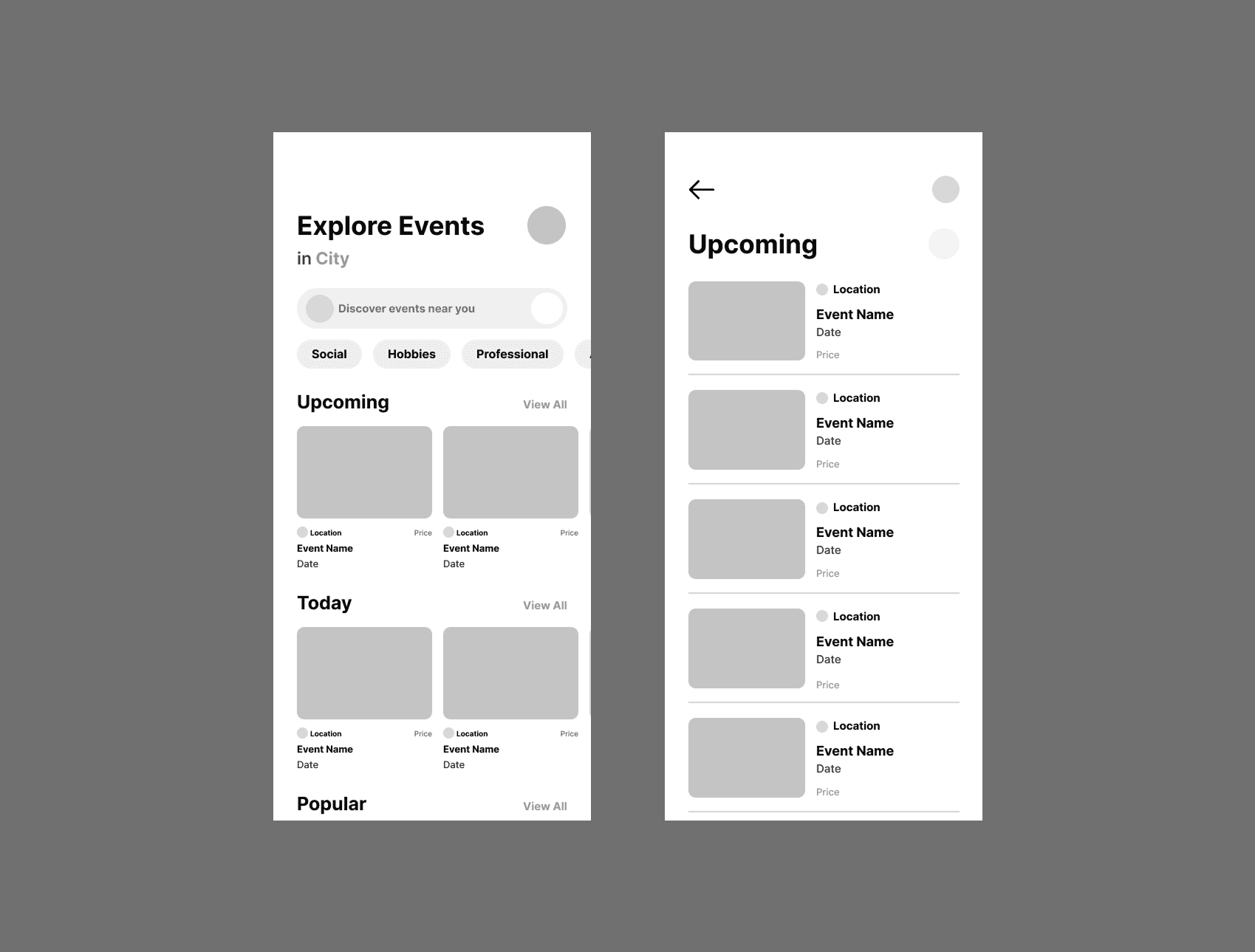
To give users who prefer more structured ways to meet potential friends, I included an events page inspired by apps like Meetup, Luma, and Eventbrite. These apps excel at organizing interest-based events and activities so I took inspiration from their layouts and information architecture. Weave highlights upcoming events near the user’s location and allows them to filter events by interests.
Maintaining Friendships
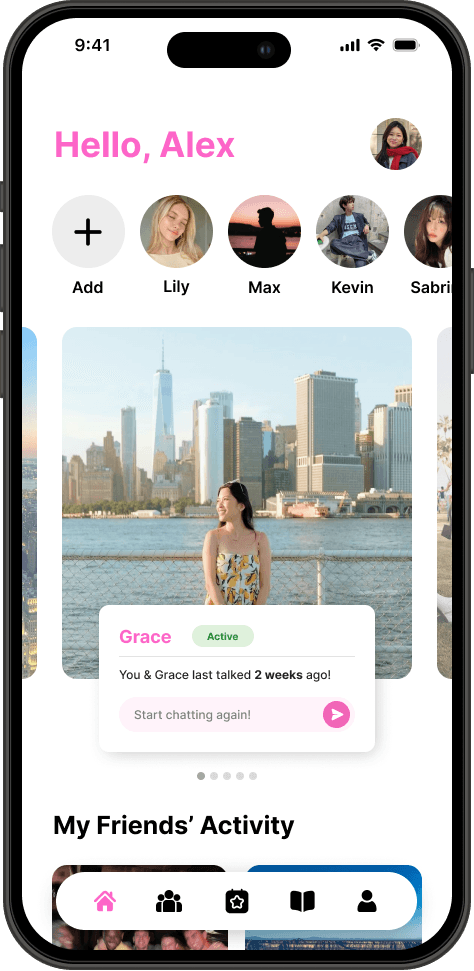
I designed the home and scrapbook pages to revolve around memory-sharing to support ongoing friendships. On the home page, a carousel of photos displays friends the user hasn’t contacted in a while using shared photos as reminders of moments spent together. Each friend in the carousel also includes a prompt to reconnect and a indicator of how long it’s been since the last interaction. Weave also includes “My Friends’ Activity,” highlighting recent memories friends have shared.
The scrapbook feature draws inspiration from Apple Photos’ organizational structure. Users can create scrapbooks by grouping photos into meaningful collections and share those albums with friends, reinforcing connection through shared history.
Typography & Colour
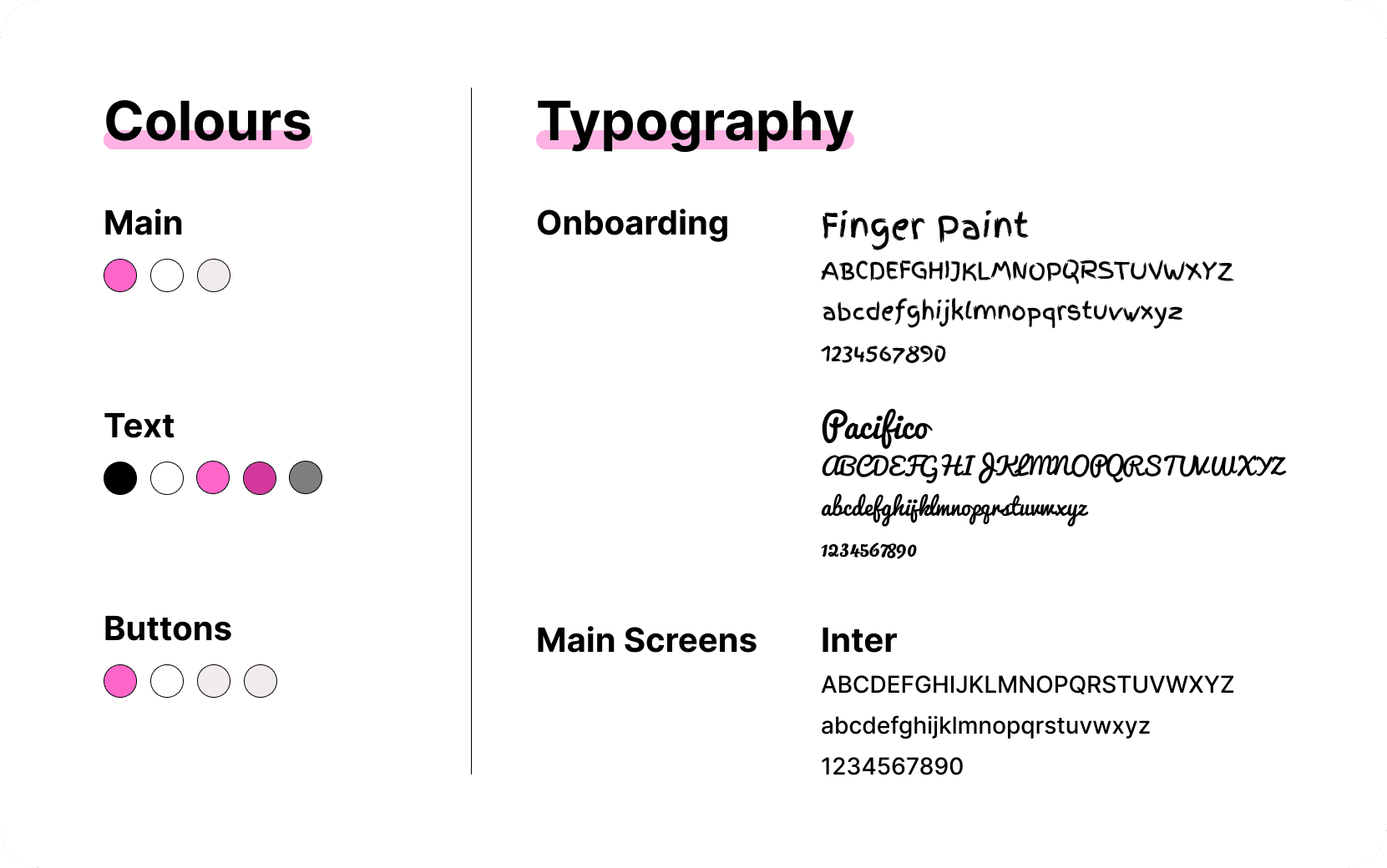
I chose to keep the brand name, colours, and typography from the original design. I felt they were rather fitting as the name Weave evokes notions of interconnectedness, and the bright pink colour palette conveys warmth, friendliness, and vibrancy. For typography, I used Inter throughout all pages to maximize accessibility and clarity throughout the platform.
Onboarding
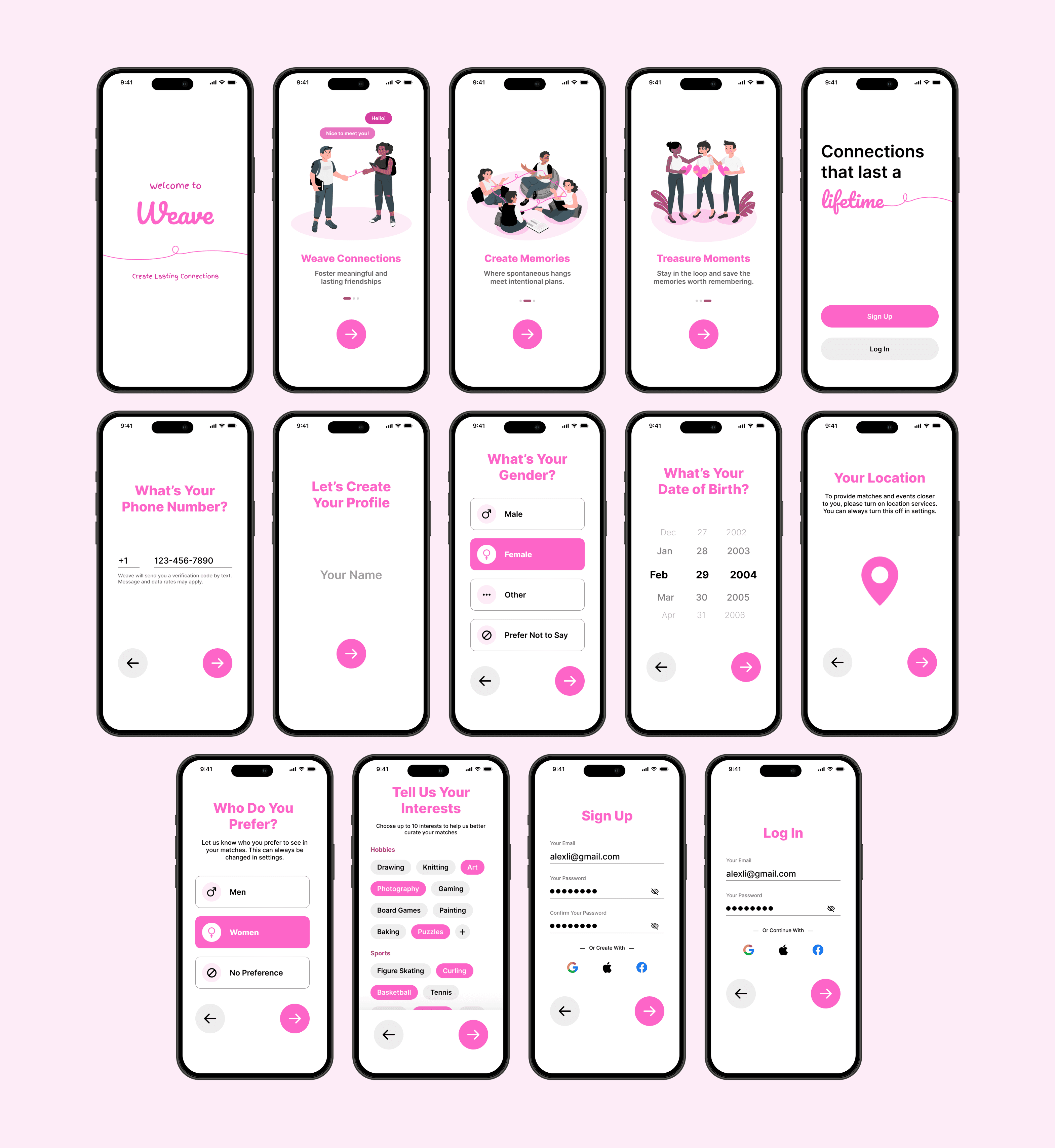
Given the purpose of the app, onboarding felt essential to introduce users to the community, gather key information, and collects key interests to generate tailored recommendations and curate the experience for the user. Unlike dating apps, I did not include the requirement of photos in onboarding as I wanted to emphasize that Weave is grounded in shared interests, not appearance-based connection.